
COLONEL / KERNEL:
A Synchromystical Meditation on Titles, Masks, & Seeds


Prologue: The Colonel in the Crevice
In April 2026, the following story was amplified by the American mainstream media: A U.S. airman, described by U.S. President Donald John Trump as a “highly respected Colonel” was shot down over hostile terrain and he was forced to hide in a mountain crevice, wounded, hunted, and silent.
Oh course, we can read this as a rescue story — every culture has them.
Sometimes they involve princesses in towers, sometimes miners underground, sometimes astronauts adrift in space (more on that one in a forthcoming video).
In Persian lore, one commonly reads tales of the Simurgh, usually described as a vast, radiant, benevolent bird (part peacock, part eagle, part dog), whose feathers shimmer with golds and reds and whose wings are so immense they can blot out the sun. In the most familiar version of this rescue tale, the Simurgh discovers an abandoned infant named Zal on Mount Alborz, in the north of Iran, raises him in her nest, and later returns him to his father with one of her feathers, which can be burned to summon her aid in the future.[1]

Our so-called unnamed “airman” has also been described as a “full‑bird colonel,” another lone figure stranded on a forbidding mountain, discovered and delivered not by ordinary means but by a “descending power” that bridges the ordinary and extraordinary worlds. Thus, there’s a sort of metaphorical “rhyme” between the Simurgh coming down from mythic heights and the U.S. rescue team swooping in from the sky. Our colonel is not just saved, but symbolically and uncannily selected — as if by destiny.
In the American tale, the colonel was holed up in a mountain fissure deep inside Iran while an armada of aircraft, intelligence operatives, and special‑operations teams converged to bring him home. Above him: aircraft, signals, noise, deception. Around him: enemies, machines of war, searchers, and barren rock. Within him: a beacon — activated, withheld, timed.
At last, extraction. The figure emerges from his earthen cranny and into the surface world.
Whether one treats the story as literal reportage, national mythmaking, or something in between, its symbolic architecture is unmistakable. A lone figure of authority — a colonel, a rank symbolizing authority, hierarchy, and military order (not a private, not a captain) — plants himself into a crevice, a kind of living tomb. He waits in darkness with only water. And then, 36 hours later, he is released by forces that seem almost supernatural.[2]
For more on that number, see our dedicated video.
This is descent, concealment, ordeal, and ascent.

To make matters even more SynchroMystical, we’re told that, at a crucial moment in the search, the hidden airman transmitted only three words: “God is good.”
The phrase was initially treated as suspicious — to the point of being a potential trap — because of its brevity and its seeming ill-fit as a military code. According to the story, those who knew the colonel recognized it at once: not as encryption, but as a personal identifier.
Amidst all the technologic chest-thumping, the decisive transmission was not a call sign, coordinate, or conventional password, but a theologically infused cipher — a kernel rather than a command, supposedly used to confirm identity and give the “go ahead” for extraction.

Indeed, distilled in the alembic of Synchromystique, this is colonel as kernel — a sort of seed buried in stone, concealed rather than commanding. This is not merely a military episode. It is a Colonel‑myth: a masked descent into unlit enclosure space until his rescue bequeaths a kind of rebirth. But, questions remain.
Had he been sewn intentionally?
Of course, Easter is strongly associated with seeds through symbolism representing new life, rebirth, and resurrection. It is a spring festival, after all — albeit one indelibly marked with a Christian signature.

We’re reminded of the so-called “Arab Spring” — a wave of mass protests, uprisings, and revolutions that spread across North Africa and the Middle East (Tunisia and quickly reaching Egypt, Libya, Yemen, Syria, and beyond) beginning in late 2010 that challenged entrenched authoritarian regimes with demands for political, economic, and social reform.
What sprouted from this embedded kernel?
Or, had the seed been choked off by the inhospitable ground, as Jesus warns?
Let’s take a closer look at the command vocabulary.
By the way, watch the companion video, here:
Interlude: Argo and the Theater of Extraction
There is, incidentally, a cinematic “rhyme” here as well. And it works as a pace car for what follows — especially for readers or viewers with less familiarity with Synchromystique™, which we approach as a blend of both art and science in the interpretation of synchronicities.
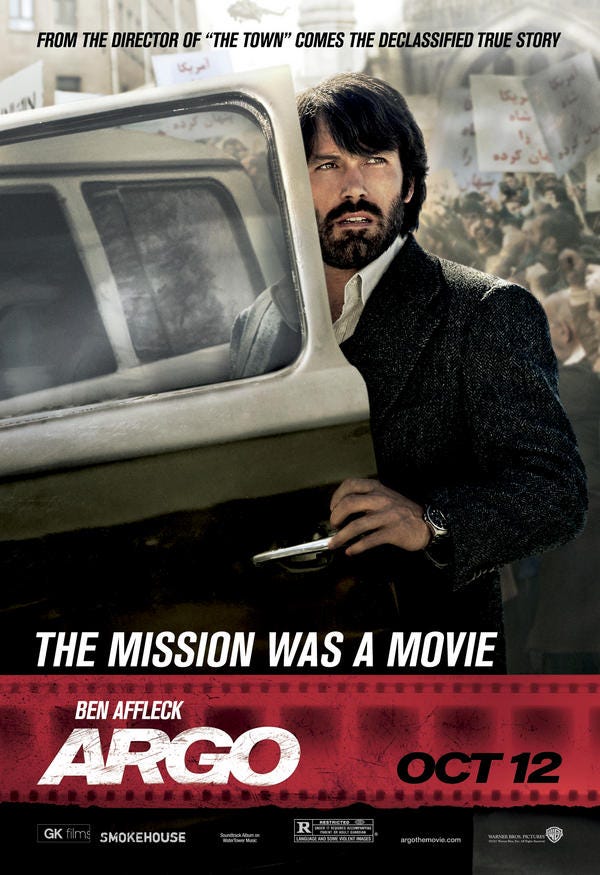
Recall that, in the 2012 movie Argo, the climactic drama turns on an exfiltration from Iran after the 1979 revolution. It was a covert rescue operation disguised as a Hollywood film production.
We have two American extractions from Iranian soil, separated by nearly half a century, each framed as an against-all-odds triumph of improvisation, deception, and improbable timing.
One detail is especially striking. In the film, U.S. diplomat Lee Schatz (played by actor Rory Cochrane) slips a Catholic prayer card of the Holy Infant of Prague or the Holy Child of Prague into the fake Argo screenplay, ostensibly as a private prayer for protection and a token of trust in the divine — a “seed of faith,” if you will.
Religious devotion to this depiction (also known as the Infant Jesus of Prague) is traditionally associated with miraculous preservation in danger, sudden reversals of fortune, and the belief that the Child‑King intervenes swiftly when invoked.
Don’t forget that, in Greek mythology, the Argo is the swift, divinely aided ship built by Argus on which Jason and his Argonauts sailed in their quest for the Golden Fleece. Ben Affleck’s 2012 film cleverly piggybacks on this mythos by turning the name into the title of a fake sci‑fi movie.
Of course, in the movie Argo, the success of the extraction mission hinges on masks, aliases, and the artifice of a fragile cover story. These all have seeming resonance with the 2026 rescue narrative, including the “God is good” sigil embedded as a kind of spiritual authentication.
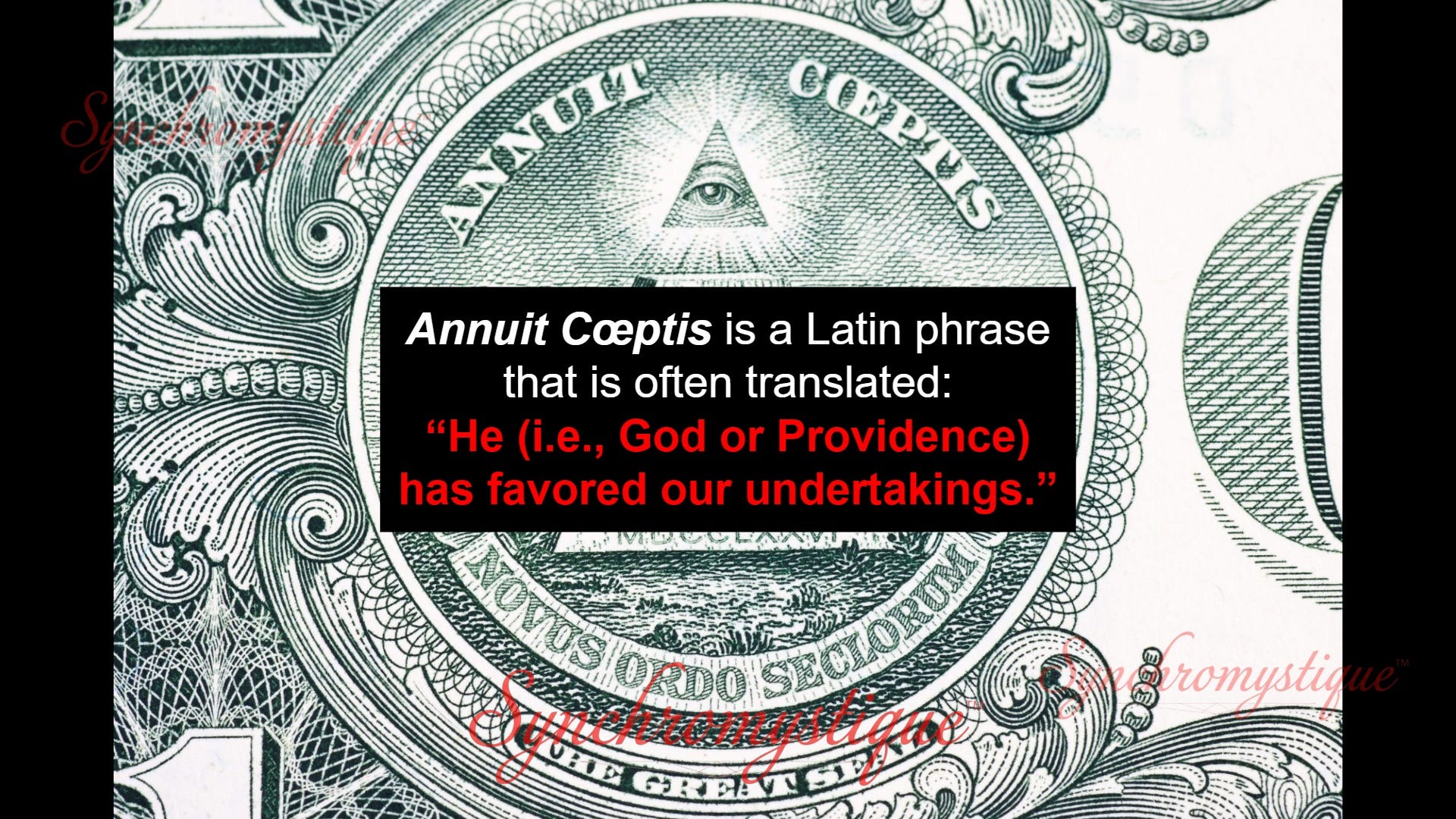
Thus, two American extractions from Iranian soil, separated by nearly half a century, each of which is trumpeted as a triumph of American ingenuity and deception, with Providence allegedly favoring the undertaking. Both tales pivot on Hollywood-esque pretense and scripting, calibrated for a performance on the world stage — and where the difference between “cover story” and “true story” is revealed to be razor thin, not to mention a matter of who’s telling it.
As for Ben Affleck himself, in the movie, he portrayed Central Intelligence Agency “exfil” specialist Tony Mendez. In interviews, Affleck once “joked” (quote, unquote) that people assumed he was secretly a CIA agent himself — a quip that lands differently when one reflects on the fact that Argo is literally a film about intelligence work masquerading as filmmaking. In both the cinematic and real‑world cases, the boundary between espionage and storytelling becomes porous.
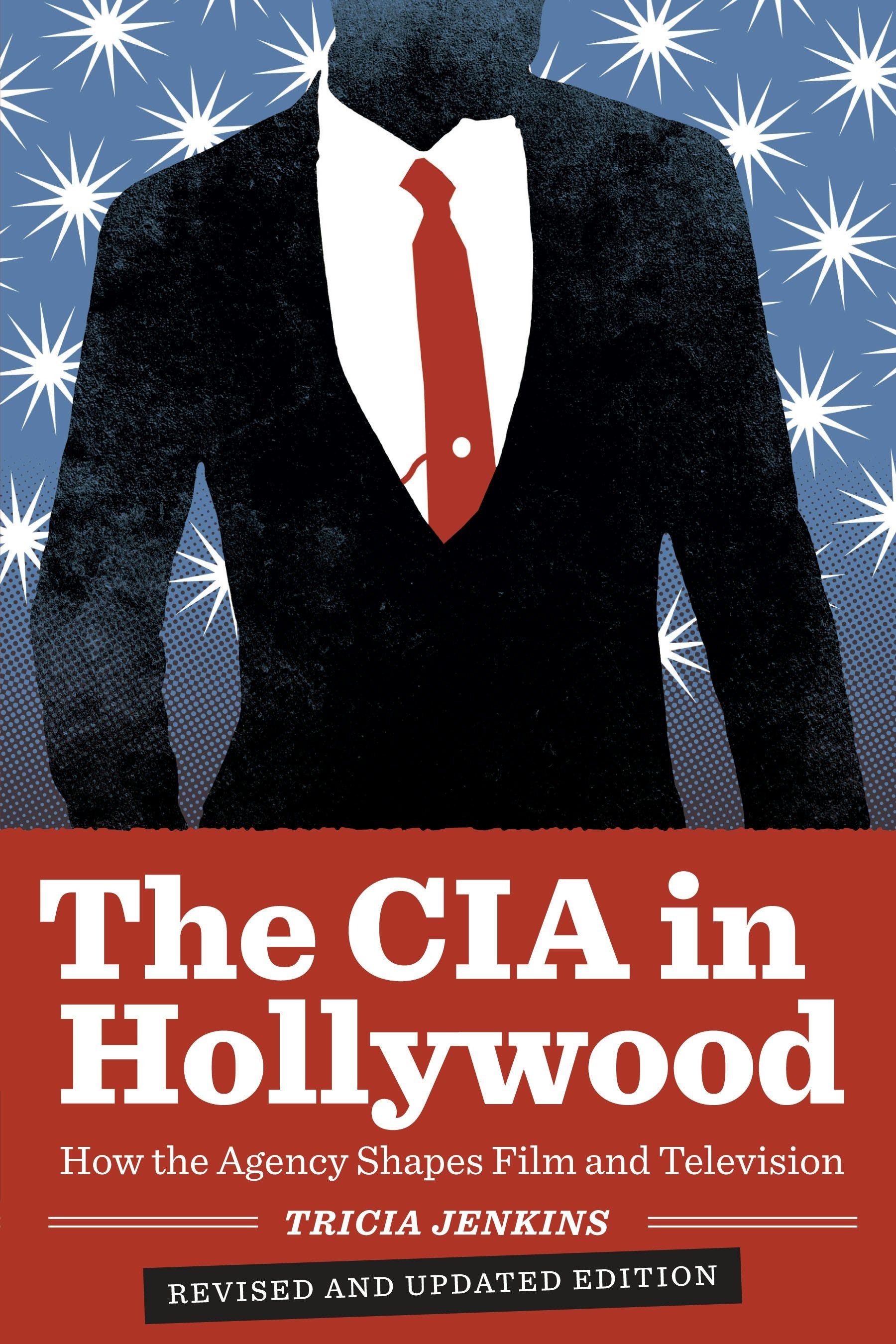
Bear in mind that, at least since the mid‑1990s, the CIA has maintained a formal office of liaison with Hollywood — minimally, designed to shape how the Agency is portrayed on film and television. This program was extensively documented by Tricia Jenkins, who showed how Hollywood scripts, character arcs, and even thematic framing were quietly massaged by the CIA to present intelligence work as competent, moral, and technologically sophisticated.
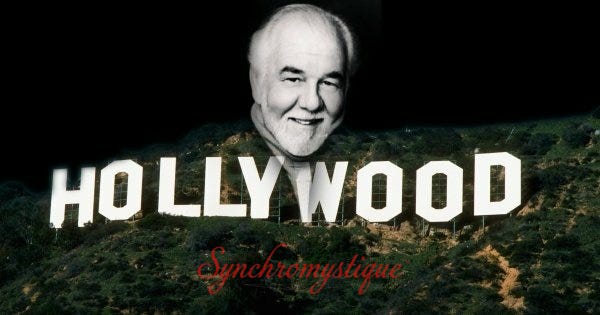
The most visible — albeit enigmatic — figure in this effort was Chase Brandon, a supposed veteran CIA operations officer who became the Agency’s first dedicated liaison to Hollywood. Brandon is said to have advised screenwriters, vetted scripts, arranged set visits, and served as a gatekeeper for productions seeking CIA access, all while cultivating an aura of mystique that blurred the line between public‑relations officer and covert operator. His influence extended across films, network television, and even publishing, making him a kind of narrative‑architect whose fingerprints appeared wherever the CIA wished to burnish its image or steer public perception. Although no direct link between Brandon and Affleck has been publicly disclosed, the latter’s admitted collaboration with the CIA during the making of Argo — combined with his own joking hints about being mistaken for an Agency man — sits comfortably (or uncomfortably) within the nexus that Brandon helped construct — in which the so-called “entertainment industry” has increasingly intersected with Langley to create parallel storytelling machines.
Oh, and don’t forget: Affleck’s former spouse, Jennifer Garner — whose role in Alias made her a pop‑culture face of espionage — later appeared in an official CIA recruitment video promoting the Agency’s public image, adding yet another layer of Hollywood–intelligence cross‑pollination.
Side by side with the 2026 colonel‑in‑the‑crevice story, all this becomes another synchronicity node where one is not sure whether we’re dealing with a rescue hidden inside a script, a script hidden inside a rescue, or something else — like an invasion dry-run or, more likely (according to analysts) a cleanup job after a botched uranium snatch-and-grab operation.
Introduction
“The most fruitful developments occur where two lines of thought meet.”
— Werner Heisenberg
As a first-pass description of “Twilight Language,” we might say that some words behave like magnets. They pull strange figures toward them — real, fictional, infamous, forgotten. And some function as a kind of Jungian-type archetypal mask. Colonel is arguably one of those words.
It appears in politics, crime, literature, occultism, cinema, advertising, and even…in computer operating systems. It attaches itself to explorers, showmen, prophets, bureaucrats, serial killers, and spiritual reformers. And as hinted already, as you follow the word along its occurrences, you mustn’t neglect its homonym, kernel — the seed, the core, the hidden center.
We have a double image: Colonel as persona and kernel as essence — mask and seed; uniform and germ; shadow and center.
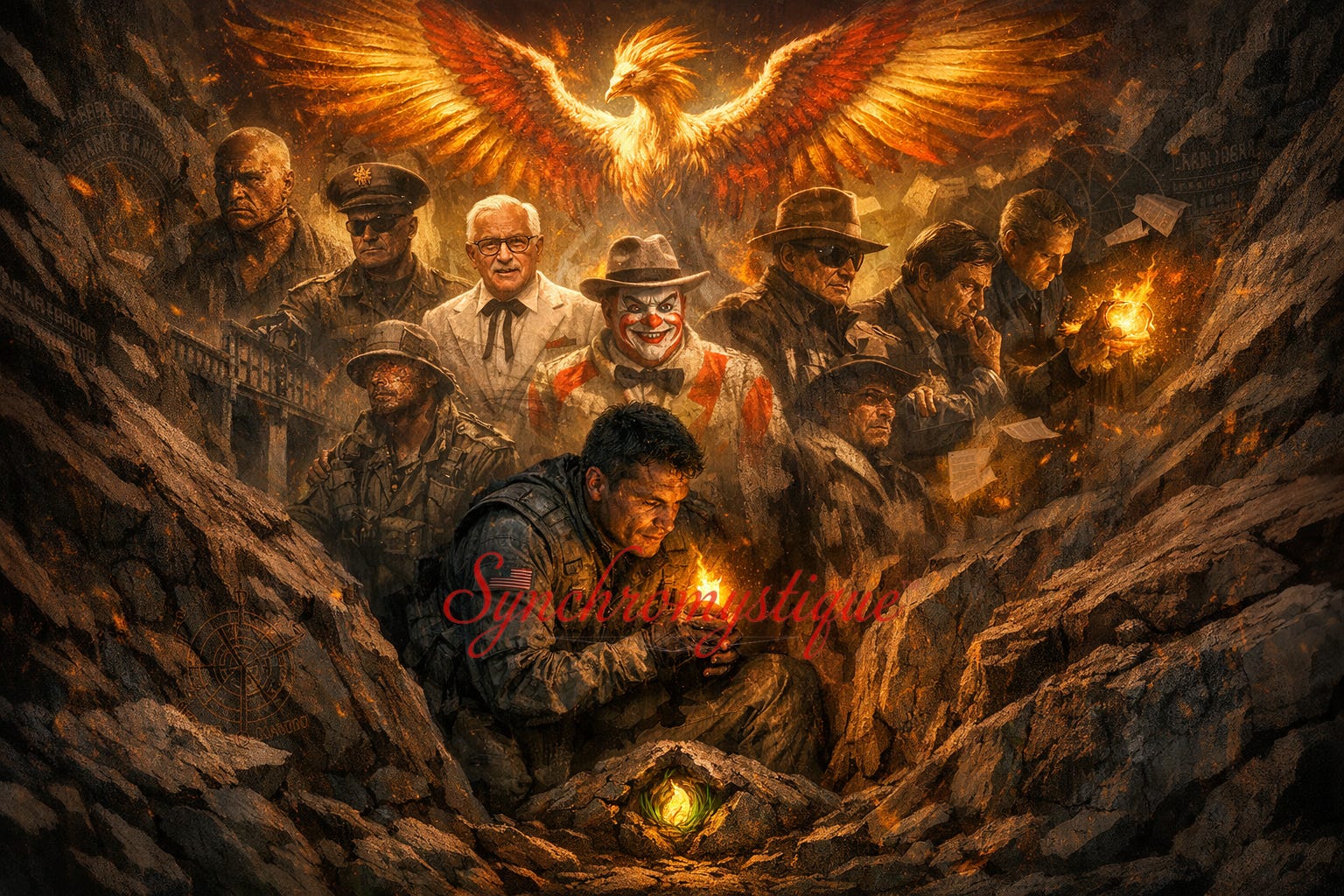
Litany of the Colonels
I. The Colonel as Shadow
In the system of Swiss depth psychologist Carl Gustav Jung, an archetype is a universal pattern of human experience — a sort of inherited psychic rôle — that shows up across cultures in myths, dreams, and other stories.
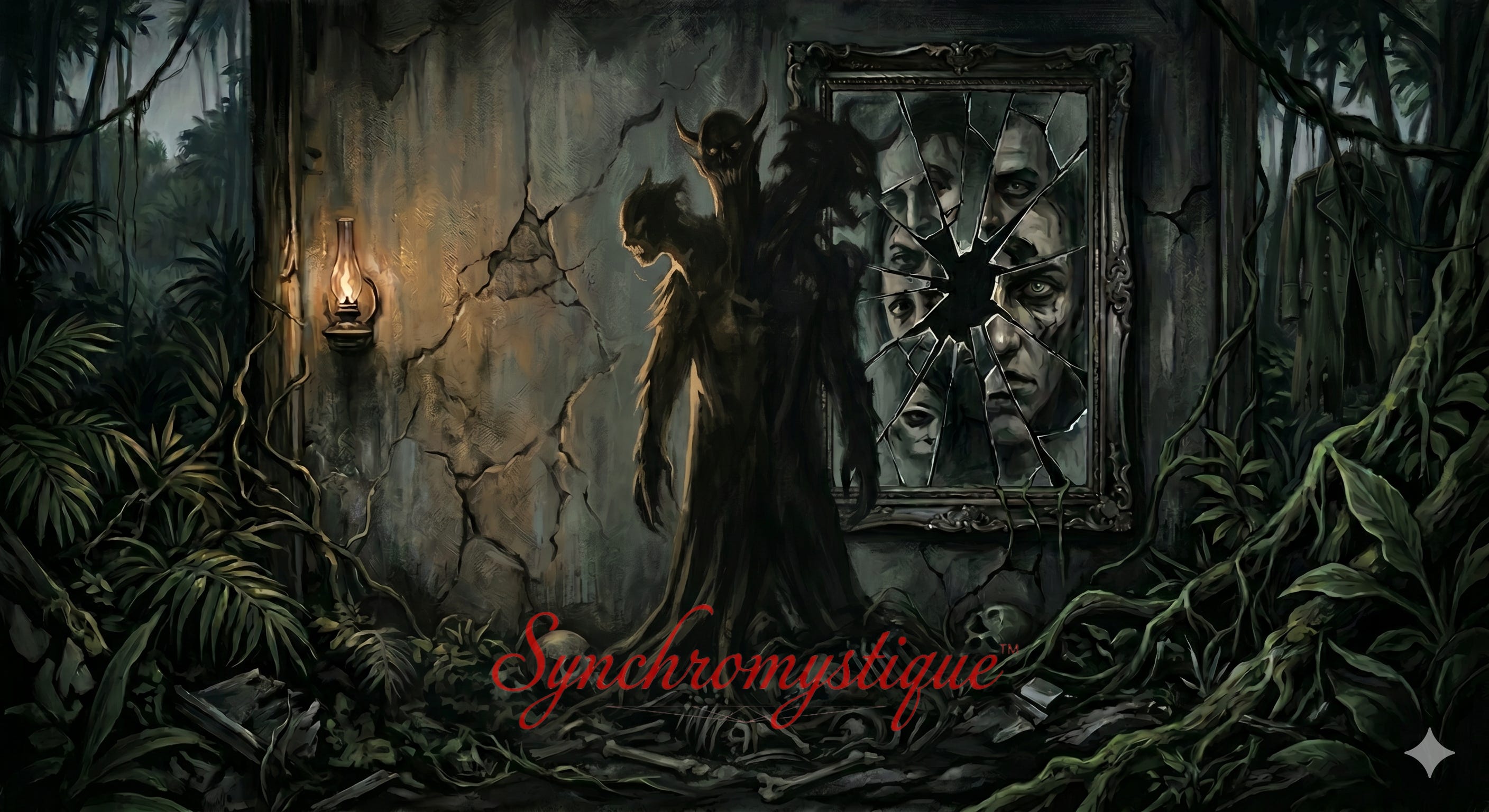
The shadow is specifically the archetype that contains the disowned, denied, or unintegrated parts of oneself. In other words, the shadow is itself an archetype of a specific sort. It’s the archetype that gathers everything a person excludes from their conscious self‑image. The Jungian shadow is the part of the psyche that contains what a person refuses to acknowledge in themselves — instincts, impulses, and traits pushed out of awareness but still shaping behavior.
Think of the shadow like the Island of Misfit Toys from Rudolph the Red-Nosed Reindeer. Both represent aspects — of a person or a toy — that have been rejected, suppressed, or deemed unacceptable by the arbiter of respectability — whether the “persona” (our social mask) or the “North Pole” in the story. It’s the embodiment of the rejectamenta that has all been banished to the seclusion of the unconscious.
Kurtz, Gacy, Nicholson, Cathcart
The clearest expression of the Colonel‑archetype’s shadow side is doubtless Colonel Kurtz portrayed by actor Marlon Brando in Francis Ford Coppola’s 1979 film, Apocalypse Now.
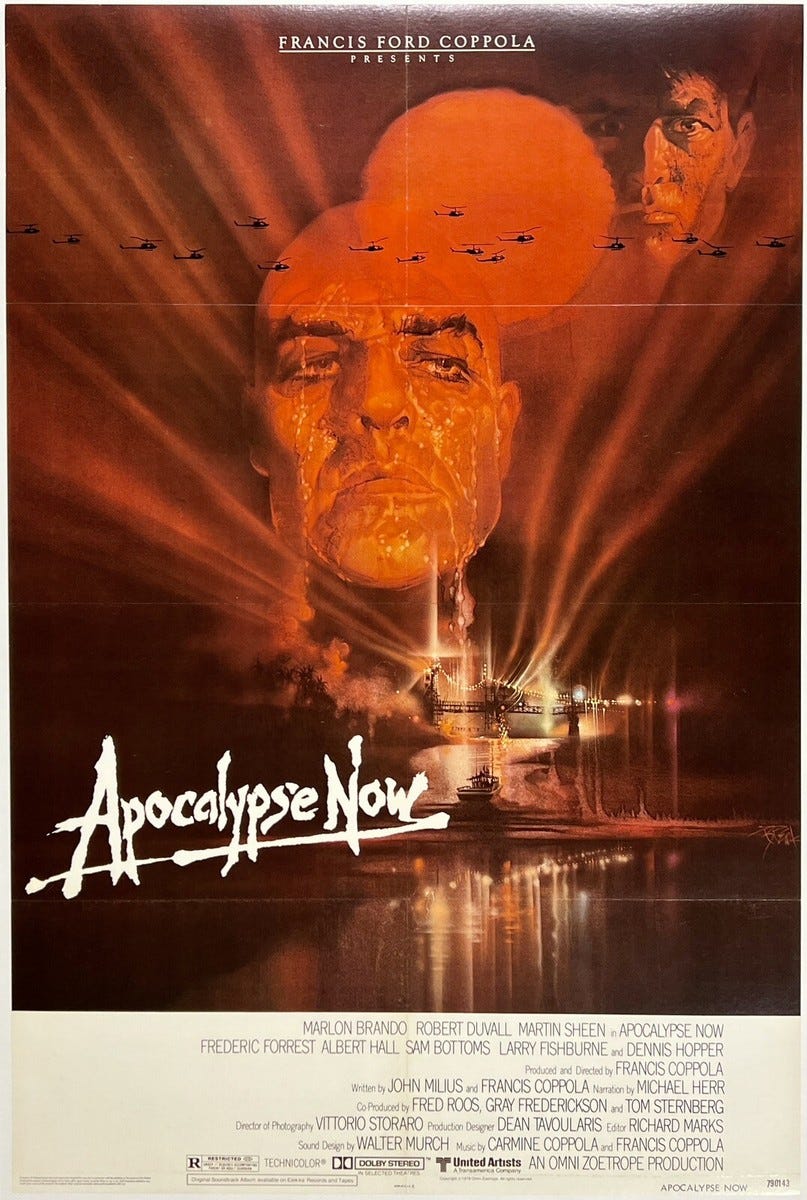
Through a Jungian lens, Kurtz is the fully externalized Shadow — first brilliant and disciplined, then utterly unbound. In his jungle lair, he builds a kingdom of death — half a temple, half a graveyard — that represents the unconscious realm into which U.S. Army Captain Benjamin L. Willard, played by Martin Sheen, must enter.
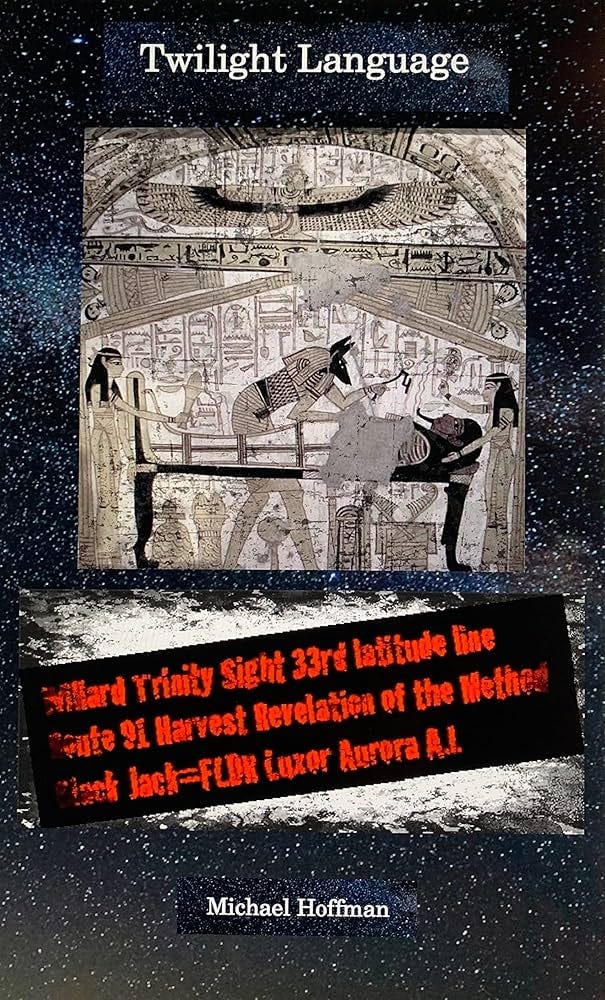
Recollect, of course, that Michael A. Hoffman has elsewhere identified “Willard” as a Twilight-Language code word.
In any case, the colonel is both mission-objective and mirror: Kurtz is the man that Willard could become or would become if he surrendered to the same terrible “clarity” (quote, unquote). This is the conscience-killing clarity of the Cremation of Care ritual, celebrated yearly by America’s political elite at the now-notorious — and exclusive — Bohemian Grove in the secluded redwood forests north of San Francisco, California.
By the way, famed Fortean John Keel discusses mirror‑symbolism in his 1975 book, The Mothman Prophecies, where he treats them as devices of psychic doubling, reflection, and “twinning.” Mirrors appear in moments of liminality or occasions of anomalous perception.
Colonel Kurtz’s final words — “The horror, the horror” — are less confession than illumination.
The shadow‑Colonel appeared previously in the character Lieutenant Colonel Nicholson (depicted by actor Alec Guinness in David Lean’s 1957 film, The Bridge on the River Kwai). Guinness’s Colonel Nicholson is a man whose military identity becomes a psychological prison. Even as a Japanese prisoner-of-war (“POW”), the character’s rigid obsession with discipline, duty, and order metastasizes into ego‑inflation and pride.
He’s tasked with building a bridge, gradually becoming so invested in its perfection that he loses sight of its strategic value to the enemy — to his eventual horror, as well.
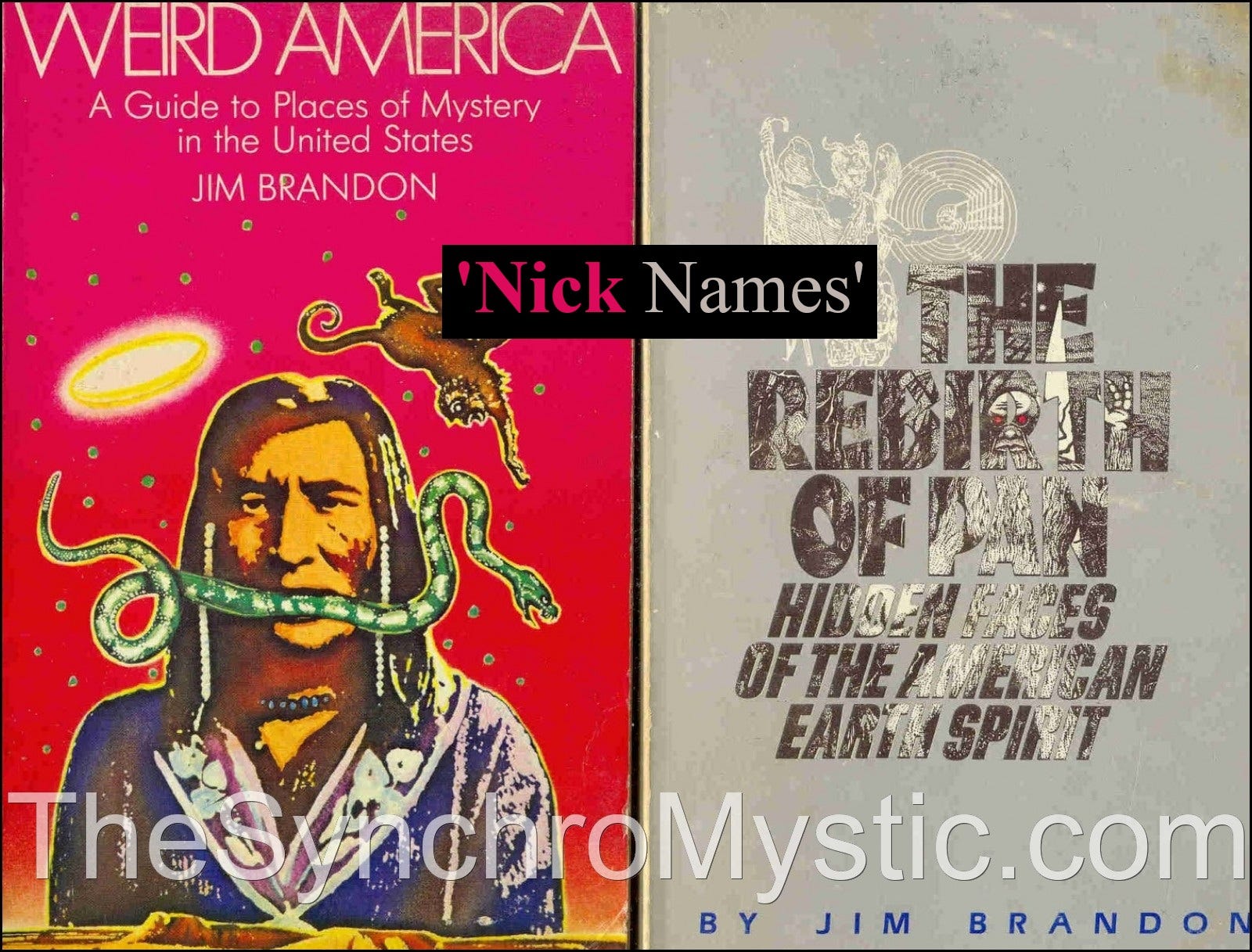
Nicholson, by the way (as a proper noun), reflects yet another perennial Lexi-Link — or Nick-Name, as recognized by my mentor, Jim Brandon. — as we have touched on in numerous past productions.
Then there’s the 36-year-old Colonel Cathcart (in Joseph Heller’s 1961 novel, Catch‑22). In this colonel, the archetype mutates into utter parody. Cathcart is the trickster‑bureaucrat — or, the shadow of the institutional. He’s all ambition, arguably without any genuine authority, insight, or wisdom.
[Three silent slides]
Mike Nichols’s 1970 film adaptation of Catch‑22 leans into grotesque absurdity, with Alan Arkin’s portrayal of Captain John Yossarian orbiting a surreal ensemble that improbably included Art Garfunkel, Bob Newhart, Anthony Perkins, Paula Prentiss, Martin Sheen, Jon Voight, Orson Welles and Martin Balsam as Cathcart.
The story was reimagined in 2019 when Hulu released a six-part miniseries version — “darker,” as Hollywood is wont to do — and featuring Christopher Abbott, Kyle Chandler (as Carthcart), and the star-power of George Clooney (who also directed).
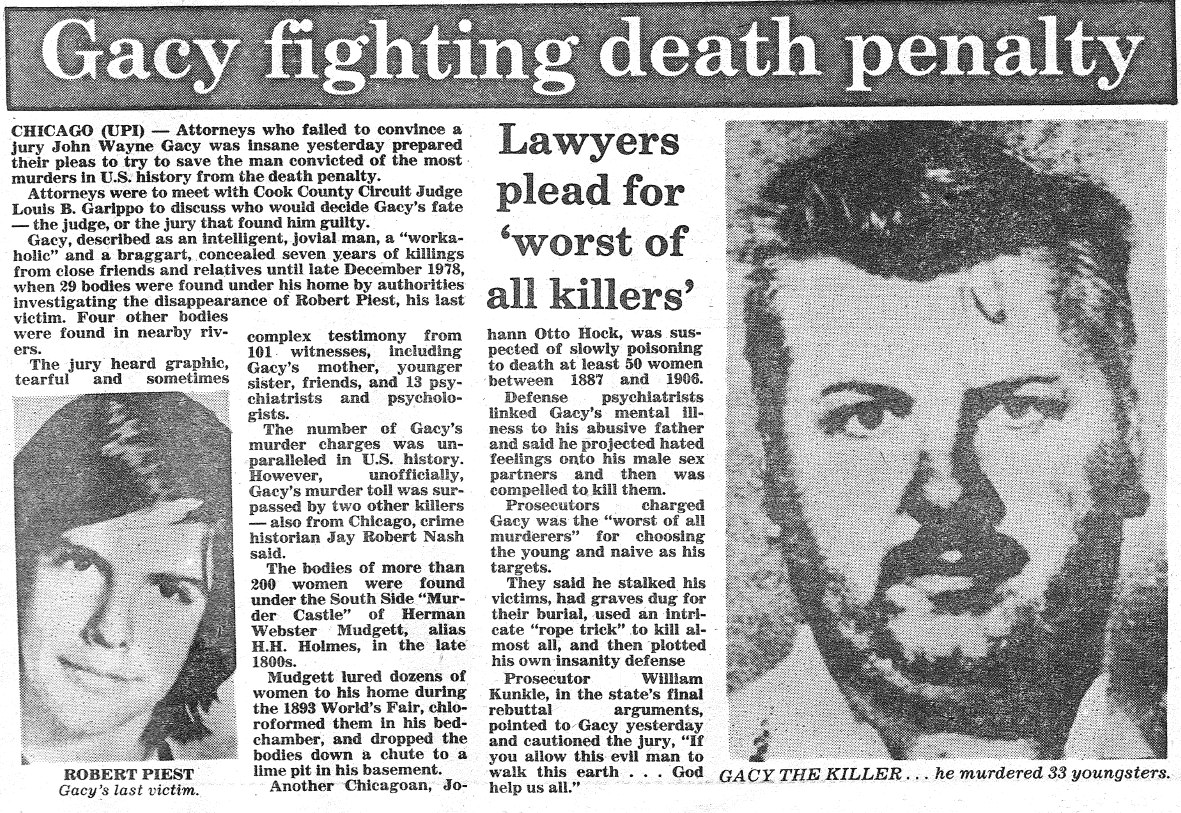
And, speaking of “darker,” how about infamous serial killer John Wayne Gacy? Gacy evidently liked to be called “Colonel” in local Democratic Party circles. His crimes — the murders of 33 boys and young men — make him one of the darkest figures ever to adopt the title. Here the Colonel‑mask becomes grotesque: a civic honorific worn by a predator as a disguise. It’s a reminder that personas can conceal monstrosity as easily as they project authority.

33, of course, is patently Freemasonic, numerologically — as catalogued by James Shelby Downard, expanded upon by Michael Hoffman, and summarized in our dedicated video. It is worth noting that our anonymous wounded U.S. Air Force colonel — rescued in early April 2026 after hiding for 36 hours in the Zagros Mountains of Iran — would presumably have been extracted from somewhere inside the Isfahan province.
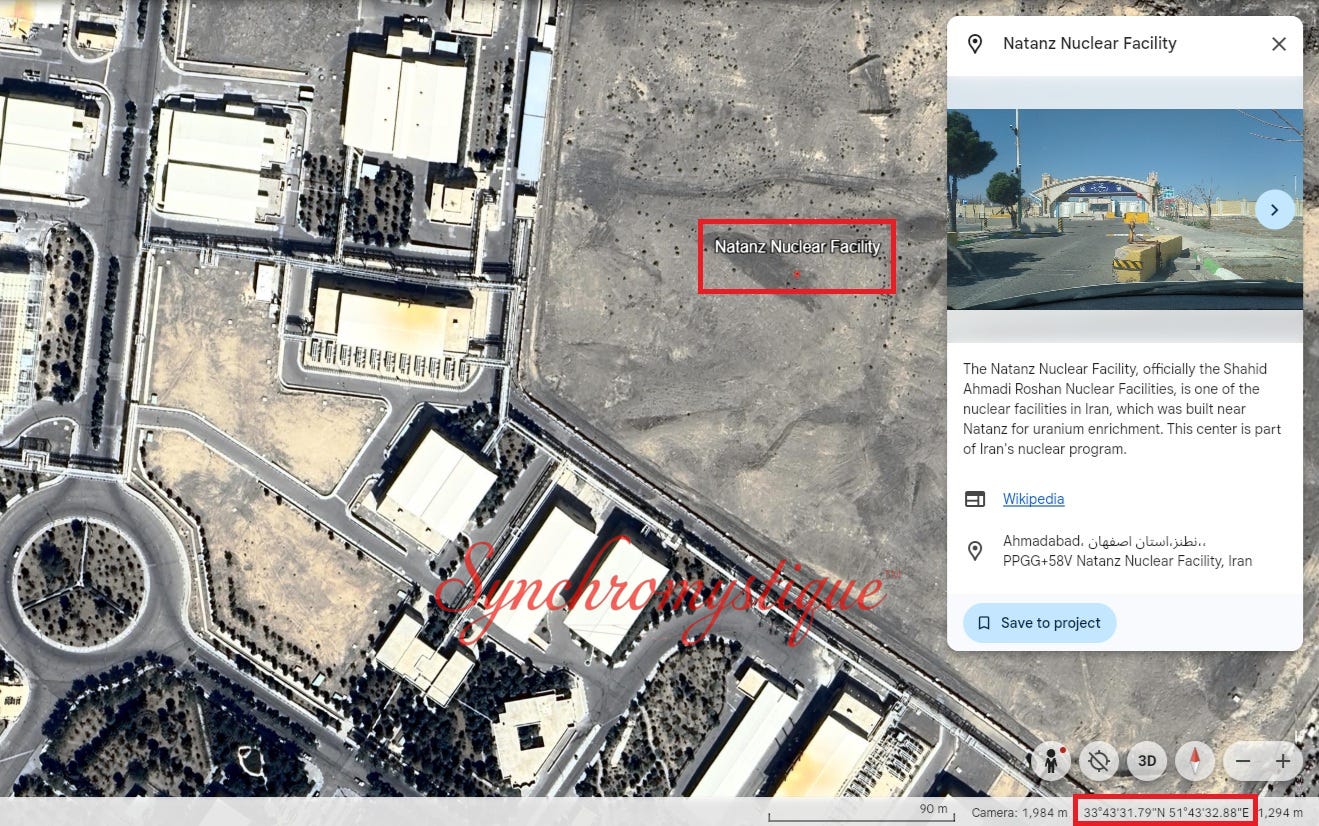
The Natanz Nuclear Facility is also located in Isfahan (in the city of Natanz, approximately 300 kilometers south of Tehran). The central hub for Iran’s uranium-enrichment program, the Natanz Nuclear Facility is said to be at or around 33°43′30″N latitude and 51°43′30″E longitude. In any case…
Let’s say that the Shadow‑Colonel is the figure who reveals what happens when power detaches from conscience. The really disturbing question is: Is that an unfortunate and unintended consequence of over-ambition, or is it a programming objective?
II. The Colonel as Mask

Mustard, Sanders, Balfour, Parker
Some Colonels are masks in the theatrical sense — costumes donned for effect.
Colonel Mustard (portrayed by Martin Mull in the 1985 movie Clue, inspired by the 1949 board game by Parker Brothers) is the parody of the military gentleman. He’s always a suspect, and his colonelcy is little more than a façade.
Mustard represents the Colonel as mask, a persona hiding guilt, secrets, or shadow material.
The Bible refers to the mustard seed as the “smallest of all seeds” in the context of Jesus’ parables about the Kingdom of Heaven.

There’s also Colonel Sanders — a bona fide, albeit honorary, Kentucky Colonel — which Harland David Sanders transformed into one of the most successful branding gimmicks in American history. Colonel Sanders’s white suit, string tie, and genteel Southern charm was affected as a means of selling fast-food chicken.
There are others: For example, Nancy Balfour, the formidable Economist columnist. She was called “Colonel Balfour” — not, of course, for military service but for her commanding presence and hectoring conversational style. Here, the title became shorthand for force of personality.
Or what about “Colonel Tom Parker,” Elvis Presley’s manager. Born Andreas van Kuijk, he was an undocumented Dutch immigrant who reinvented himself as a carnival‑bred impresario. His honorary Louisiana colonelcy, while evidently legit, became the perfect outermost mask for a man who lived behind masks: the Colonel as showman, manipulator, and gatekeeper. And for anyone laboring under the misimpression that sexual predation started with Jeffrey Epstein, merely ask what age was Priscilla Wagner when she first met Elvis Presley? She was 14.
In any case, these figures suggest that Colonel may be adopted as a piece of (let’s call it) “persona‑technology”: a means of assuming or projecting authority, legitimacy, or mystique.
Interlude: Masque as Persona‑Technology (A Courtly Operating System)
The word “mask” has an older, more court‑specific cousin: the masque (or “maske”) — lavish Tudor‑Stuart entertainments in which courtiers (and sometimes royals) quite literally disguised themselves for scripted dance, play, and ritualized spectacle.
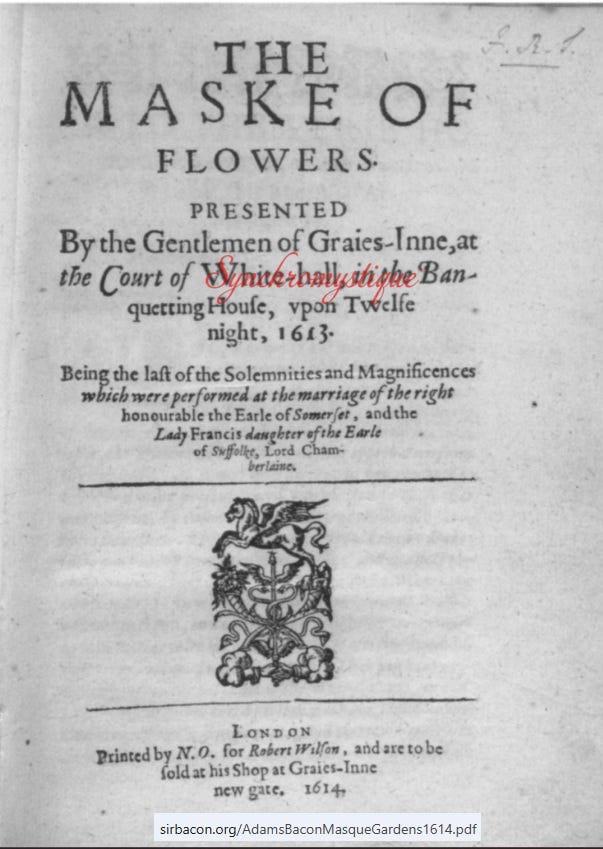
These productions were not merely “shows” for the sake of performance; they were multi‑media machines with social meaning. Sometimes, they displayed the monarchy’s conception of the ideal political order. But they were always carefully choreographed to — and culminated in — participation in which court rank and proximity to power were spelled out as visible facts.[3]
Masques helped to legitimize the people in authority. This worked through something like what later Scottish Enlightenment philosopher David Hume would call psychological habituation. After you had seen people move, speak, and appear in these ritualized settings, it became easier to accept them as the proper possessors of authority.
A masque (which was always allegorical) was also, quite explicitly, a place to see and be seen — a space where one learned the court’s grammar by watching it and moving within it, amid heat, torches, and engineered stagecraft. In that sense, the masque functioned like a training ground without ever admitting it was one. It was a theater of protocol.
Although under the Stuart monarchs masques often gestured toward “divine right,” they were not primarily designed to argue — in a rational or moral sense — that certain people deserved power. That was already assumed. Rather, the masques confirmed a participant’s status by repeatedly placing them in visible rôles in front of audiences. Seeing courtiers and royals costumed as gods, embodying virtues, or wielding cosmic forces lent them transcendent or supra‑personal auras of legitimacy.
Participation in a masque served as a credential. And courtiers were expected to dance well, dress superbly, and to carry themselves with grace throughout the ritual — not as decoration, but as evidence of their real-life courtly competencies. To discharge one’s obligations (and to be visible in such a performance without embarrassment) demonstrated one’s aesthetic judgment, discipline, emotional self‑control, and, most importantly, fluency in court protocol.
Now, at the time, masques were largely intra‑elite events, performed by courtiers for the court itself — and, often, for foreign diplomats and other high‑ranking visitors. Questions of authorship aside, the Shakespearean corpus democratized the masque experience. Shakespeare retooled some of the mechanisms (allegory, spectacle, role‑doubling, ritualized visibility) and translated them into a public theatrical form — with professional actors standing in for courtiers, so that ideas about authority, succession, and order could be experienced by a much wider audience — though without the direct participatory power of court masques.
Nightly news and official press events are our Baconian masques—rituals that stabilize authority through elite visibility—while Hollywood and celebrity culture are our Shakespearean stage, translating those legitimating grammars into narrative form for mass audiences.
“Colonel as Mask” belongs to this same family of techniques — persona not as a mere disguise, but as a technology for manufacturing legitimacy, projecting authority, and scripting social reality.
III. The Colonel as Explorer and Psychopomp

Percy Fawcett
We shouldn’t exclude Colonel Percy Harrison Fawcett — British artillery officer, explorer, seeker of the lost city of “Z” — …
…who vanished into the Amazon rainforest in 1925 and became a myth.
Percy Fawcett — whom we mentioned in our video “Cíbola” and discussed at slightly greater length in “Mystery Méditerr.” —
…is the Colonel as psychopomp, the guide who crosses into the unknown and (sometimes) is never seen again. His disappearance is a synchronicity magnet in its own right: a real‑world enactment of the archetype of the explorer swallowed by a labyrinth.
By the way, Colonel Percy Fawcett was briefly stationed in Ceylon (modern Sri Lanka) and was the brother of mountaineer and novelist Edward Douglas Fawcett.
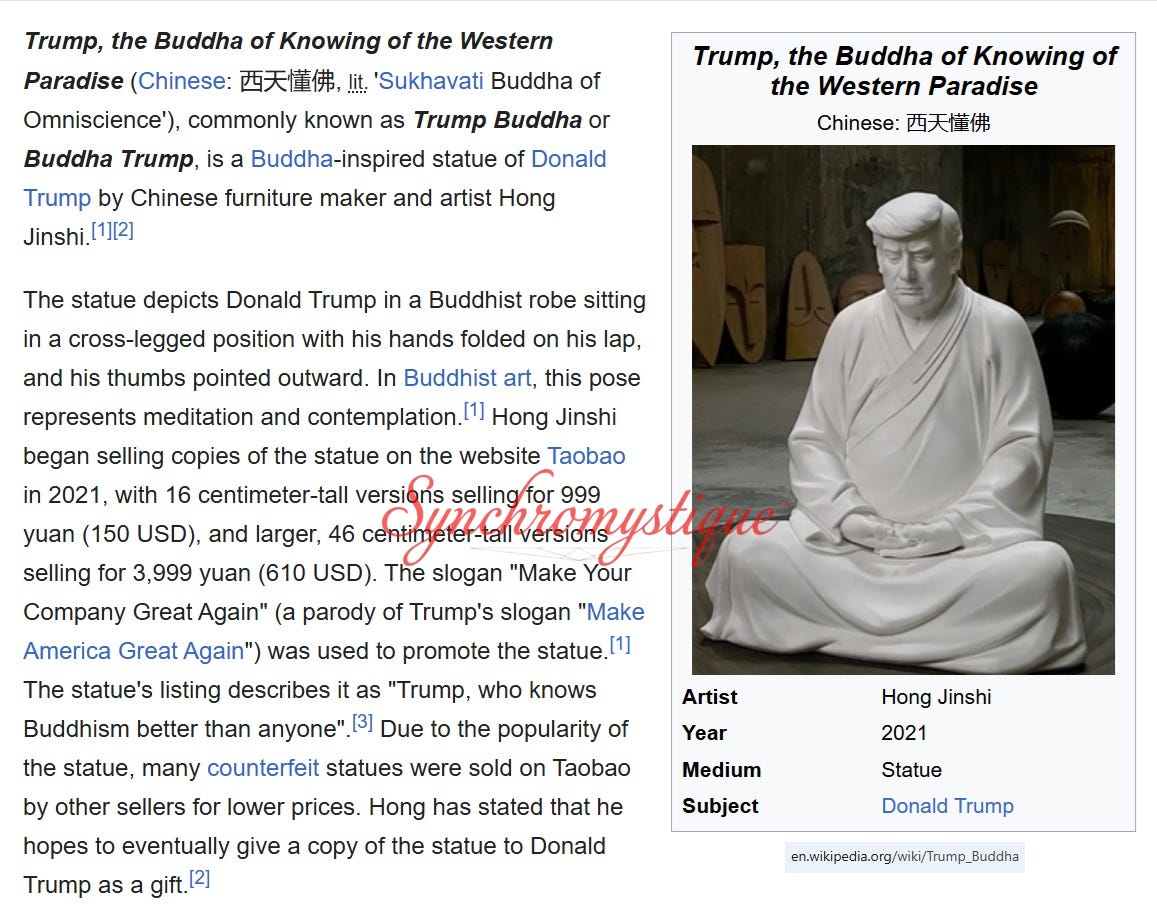
Brother Edward Fawcett converted to Buddhism in 1890 while traveling in Ceylon, where he took the traditional vows alongside Theosophical Society co-founder Henry Steel Olcott. Thereafter, Edward Fawcett began moving in Theosophical circles and became a close associate of none other than Madam Helena Petrovna “H. P.” Blavatsky herself, going so far as to assist her with the research and writing of her 1888 magnum opus, The Secret Doctrine …
— especially with regard to the second volume’s reimagining of evolutionary theory (as discussed in “10 ‘Nazi’ Occultists, Part 1”).
Whereas Colonel Percy Fawcett enacted the archetype of the explorer lost to the outer maze, …
…Edward Fawcett charted an interior terrain — scaling metaphorical peaks of metaphysics, occult philosophy, and imaginative speculation, …
a quieter version of the psychopompos who operated in the realms of thought rather than at the edge of the map.
IV. The Colonel as Heresiarch

Robert G. Ingersoll
Let’s talk about Colonel Robert Green Ingersoll for a moment. Nicknamed “the Great Agnostic,” Ingersoll was an actual officer during the Civil War. But you might say that his true battlefield was the American mind.
Ingersoll’s lectures — at once fiery, humorous, and prophetic — made him something of a secular apologist for Enlightenment rationalism or a preacher of “reason.”
His Colonelcy became a kind of inverted priesthood; here, we observe the Colonel functioning as a heresiarch, commanding allegiance to modern ideas rather than to the Union Army.
As a footnote, Colonel Bob Mountain — located in the Colonel Bob Wilderness within Washington state — is named for Colonel Ingersoll, and may be found along the 47th parallel (specifically 47°29′18″N 123°44′47″W).
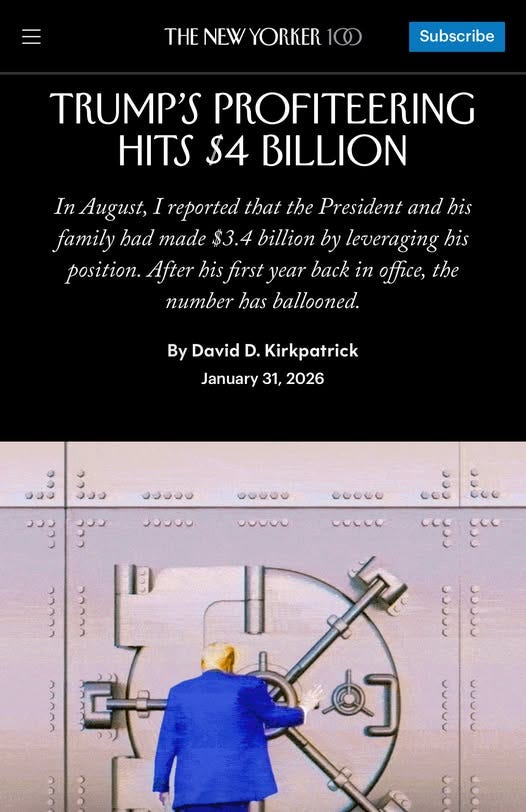
47 is an especially active number under the second administration of Donald J. Trump (47th POTUS).
V. The Colonel as Mastermind
Hannibal Smith
Who remembers The A‑Team, the fictional action‑adventure television series that aired on NBC during the early 1980s (January 1983 to March 1987)?
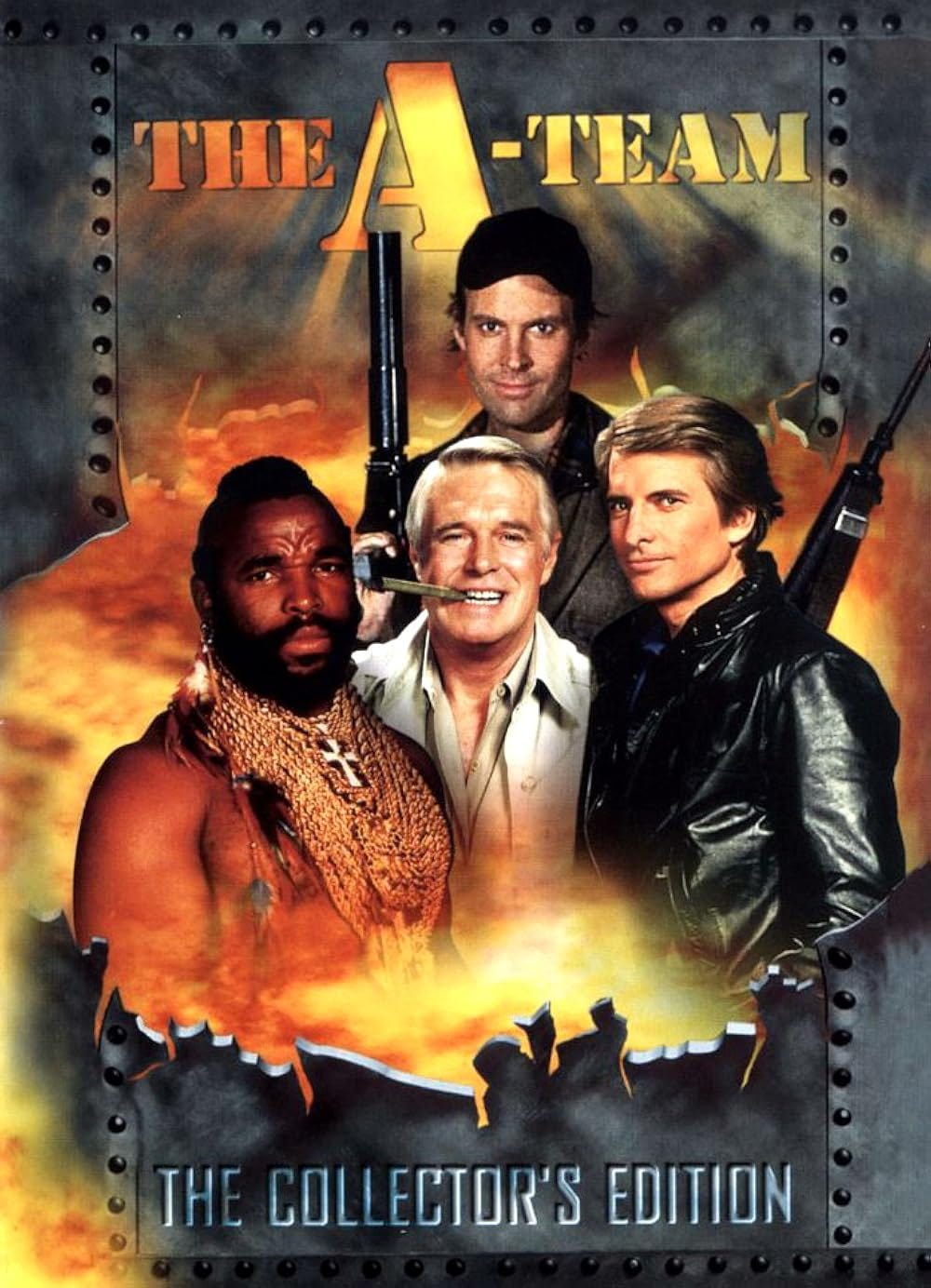
It follows a group of “wrongly accused” former U.S. Army Special Forces soldiers who escape captivity and, while on the run from the government, hire themselves out to help the helpless using ingenuity, firepower, and elaborate plans that rarely get anyone hurt.
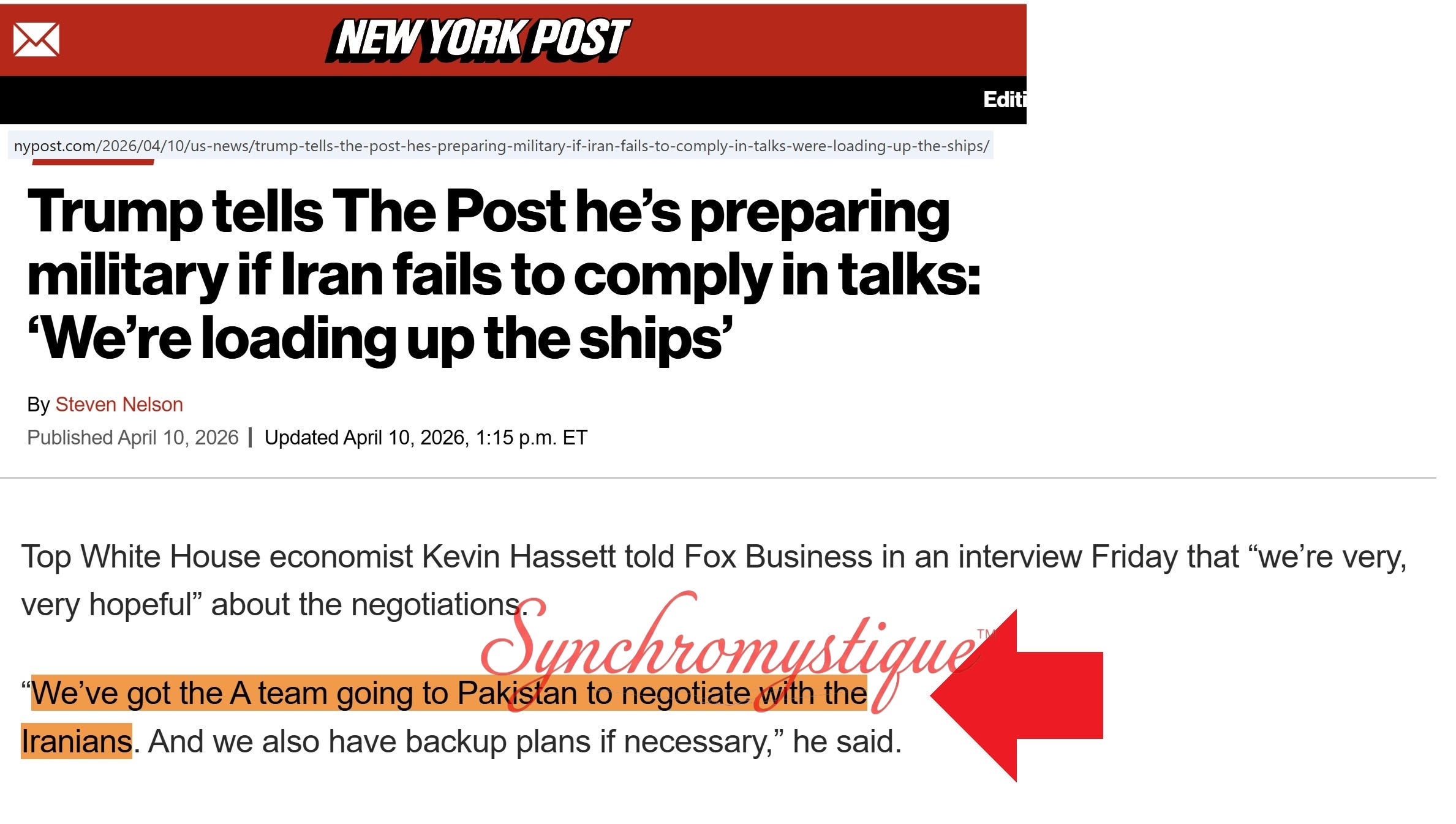
According to CNN: “Top White House economist Kevin Hassett told Fox Business …that ‘we’re very, very hopeful’ about the [U.S.-Iranian peace-talk] negotiations [in Islamabad]. ‘We’ve got the A team going to Pakistan to negotiate with the Iranians. And we also have backup plans if necessary,’ he said.”[4]
The tv show was remade as a movie in 2010, by 20th Century Fox.
Note the tagline – especially in relation to the current goings on in the Middle East. the president’s critics have supposed that: “Trump Had No Plan B for Iran.”[5] (Some even wonder whether he had a Plan A.) Indeed, “The Donald” himself evidently told reporters (April 10, 2026) that the U.S. didn’t “need a backup plan” should the Iranian talks fail. “Their military is defeated,” he insisted.
But, whether portrayed by George Peppard or William John “Liam” Neeson, Colonel John “Hannibal” Smith, embodies our archetype in its playful form: …
…the strategist who sees the whole board, the mastermind who loves it when a plan comes together.
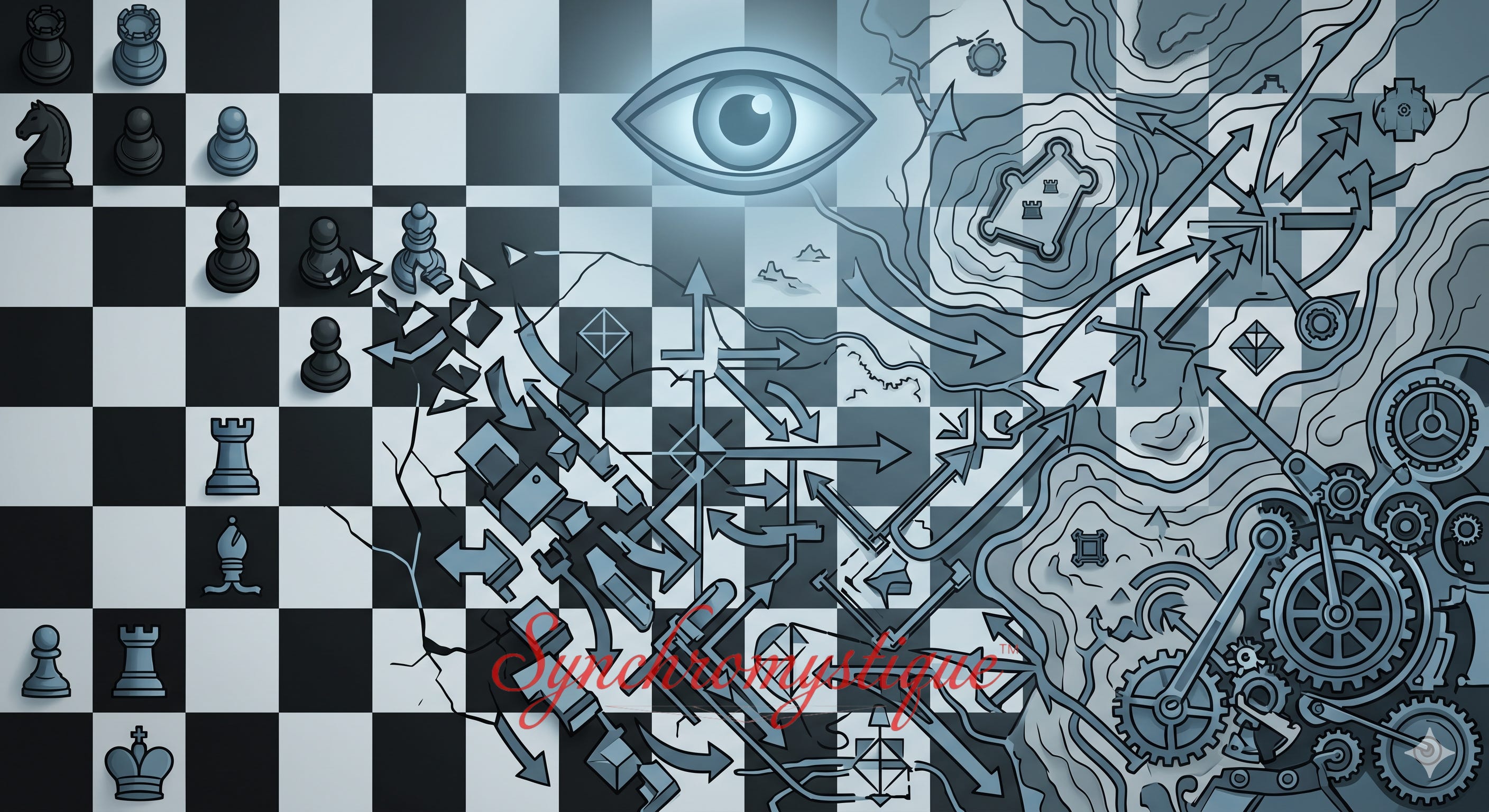
Of course, this is the way that Trump’s still-fawning admirers claim that he views the world: As a tessellated game board on which he outmaneuvers opponents with ease.
This is the Colonel as intelligence, the one who orchestrates chaos into order.
Interlude: On False Flags & the Hannibal Doctrine
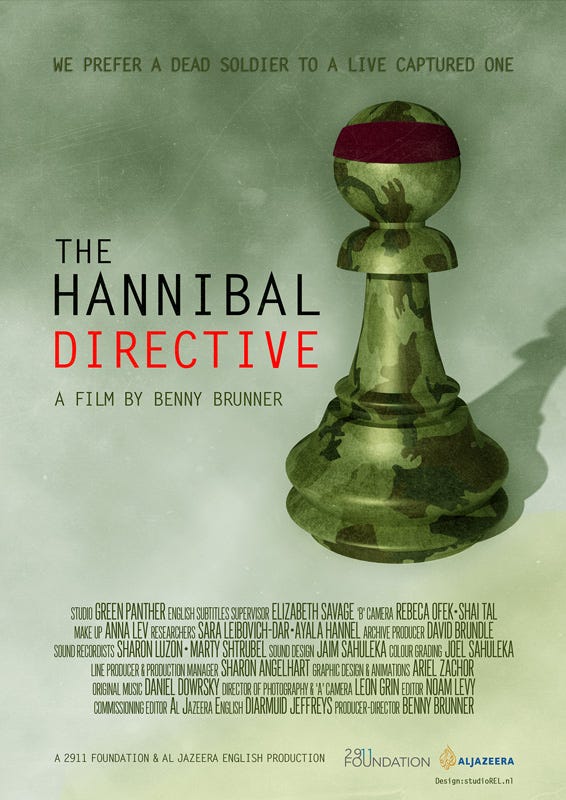
As a postscript, the state of Israel has its so-called “Hannibal doctrine” — a set of military protocols that authorizes overwhelming force to stop the capture of an Israeli soldier, even at grave risk to the captive’s own life (to say nothing of any bystanders). According to publicly reported evidence, said doctrine was most recently implemented on and immediately following October 7, 2023, when Hamas fighters managed what was ostensibly a surprise attack in southern Israel.
I say “ostensibly” because there are contrarian analyses in the æther.

The most prominent and institutionally credible person to publicly suggest that Benjamin Netanyahu had (or should have had) advance warning of the October-7 attack is the Jeffrey-Epstein-connected former Israeli prime minister and IDF chief of staff Ehud Barak, who has repeatedly accused the current PM of creating the conditions for October 7 through long-term strategic choices (see HERE).
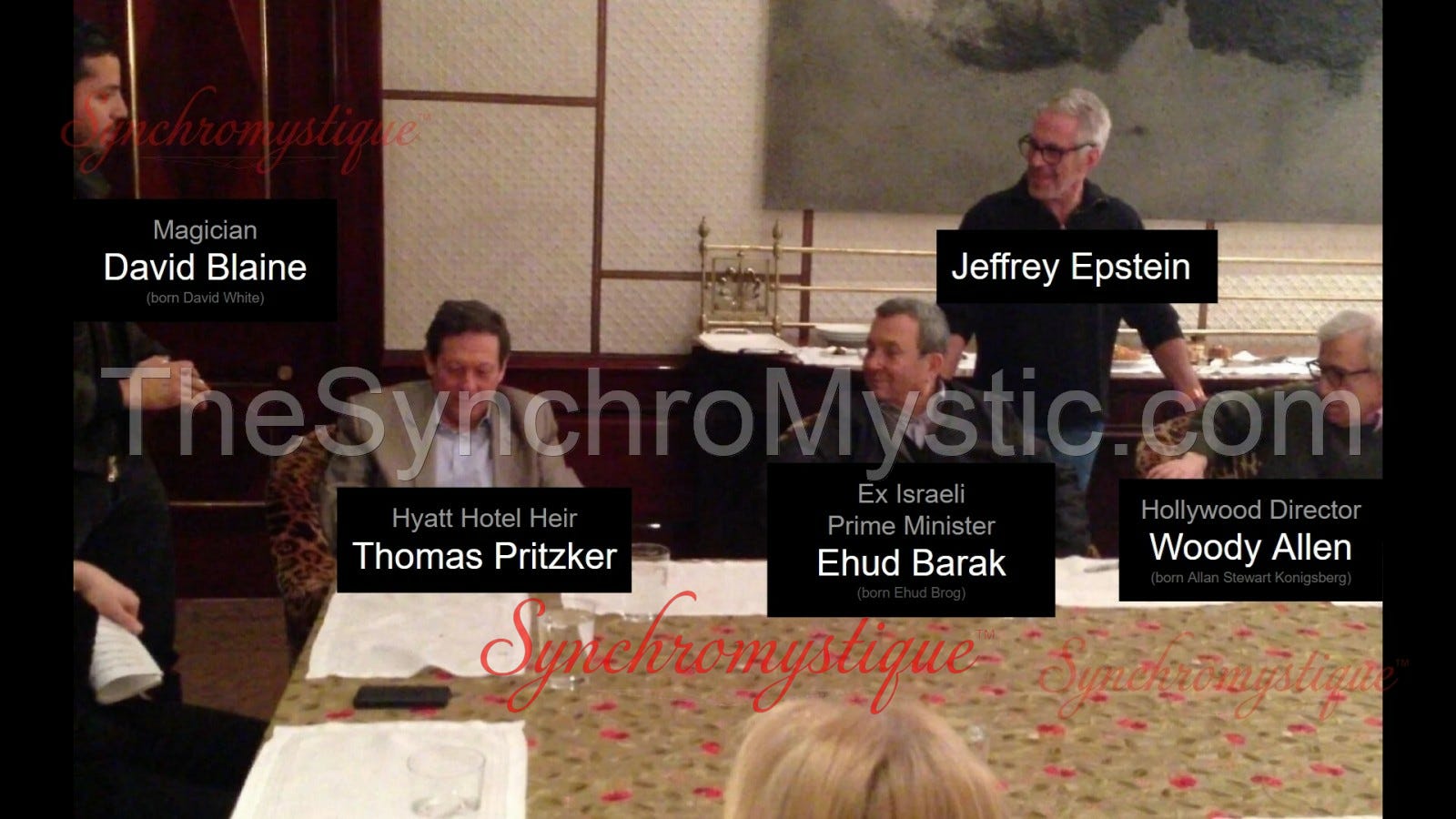
Specifically, and as we noted in our article on the crypto-history of Zionism: “Israel covertly funded and supported Hamas for years. Journalist Richard Sale wrote: ‘Israel and Hamas may currently be locked in deadly combat, but, according to …U.S. intelligence officials, beginning in the late 1970s, Tel Aviv gave direct and indirect financial aid to Hamas over a period of years. Israel ‘aided Hamas directly – the Israelis wanted to use it as a counterbalance to the PLO (Palestinian Liberation Organization),’ said Tony Cordesman, Middle East analyst for the Center for Strategic Studies. Israel’s support for Hamas ‘was a direct attempt to divide and dilute support for a strong, secular PLO by using a competing religious alternative,’ said a former senior CIA official.’”[6] And this wasn’t just “Israel’s” support for Hamas — but Netanyahu was involved personally as well. (See HERE.)
An alternative, alleged by retired Israel Defense Forces (“IDF”) major General Yitzhak Brik (also spelled Brick), has it that shadowy forces in the Israeli military withheld vital intelligence from Netanyahu. The former IDF ombudsman is a long‑time critic of Netanyahu’s security policies. Nevertheless, in the case of October 7, according to multiple interviews and statements after the attacks, Brik has argued that Israeli leadership received clear intelligence warnings and failed to act. The general implied that this failure may have been deliberate or politically motivated.[7]
General Brik’s surname invites Lexi-Link parallels with BRICS, a loose coalition of major emerging economies — originally Brazil, Russia, India, China, and South Africa — formed to coordinate economic and geopolitical influence and to counterbalance U.S.‑dominated global institutions and the dollar. Russia and China, although by no means as powerful as the United States, are nonetheless too big for America to push around. Brazil, India, and South Africa are, to a large extent, already aligned with the U.S. The expansion of BRICS to include Iran was thus noteworthy — and may perhaps provide a reason (beyond the U.S.-Israel “special relationship”) for Donald Trump and Benjamin Netanyahu’s Operation Epic Fury.
In any case, General Brik’s claims were widely covered in Israeli and international media (see, e.g., HERE and HERE) and, if true, would put the October-7 attacks in a similar light to the Pearl Harbor attacks in 1941 (according to Robert Stinnett’s 1999 book Day of Deceit[8]), the Gulf of Tonkin incident (according to various sources, summarized HERE), or 9/11 (for an introduction, see David Ray Griffin, The New Pearl Harbor[9]).
A few other public figures have made similar accusations, though none with Barak’s or Brik’s combination of rank, institutional standing, or mainstream visibility. These include:
- Tamir Pardo, a former Mossad director, who has said that Netanyahu ignored repeated intelligence warnings, but again stopped short of alleging intentional allowance.
- And several now-retired Shin Bet and Aman (military intelligence) officials have said that intelligence warnings were clear and unheeded — but, again, they have not framed it as deliberate.
VI. The Colonel as Alchemist
Roy Mustang, William Selig
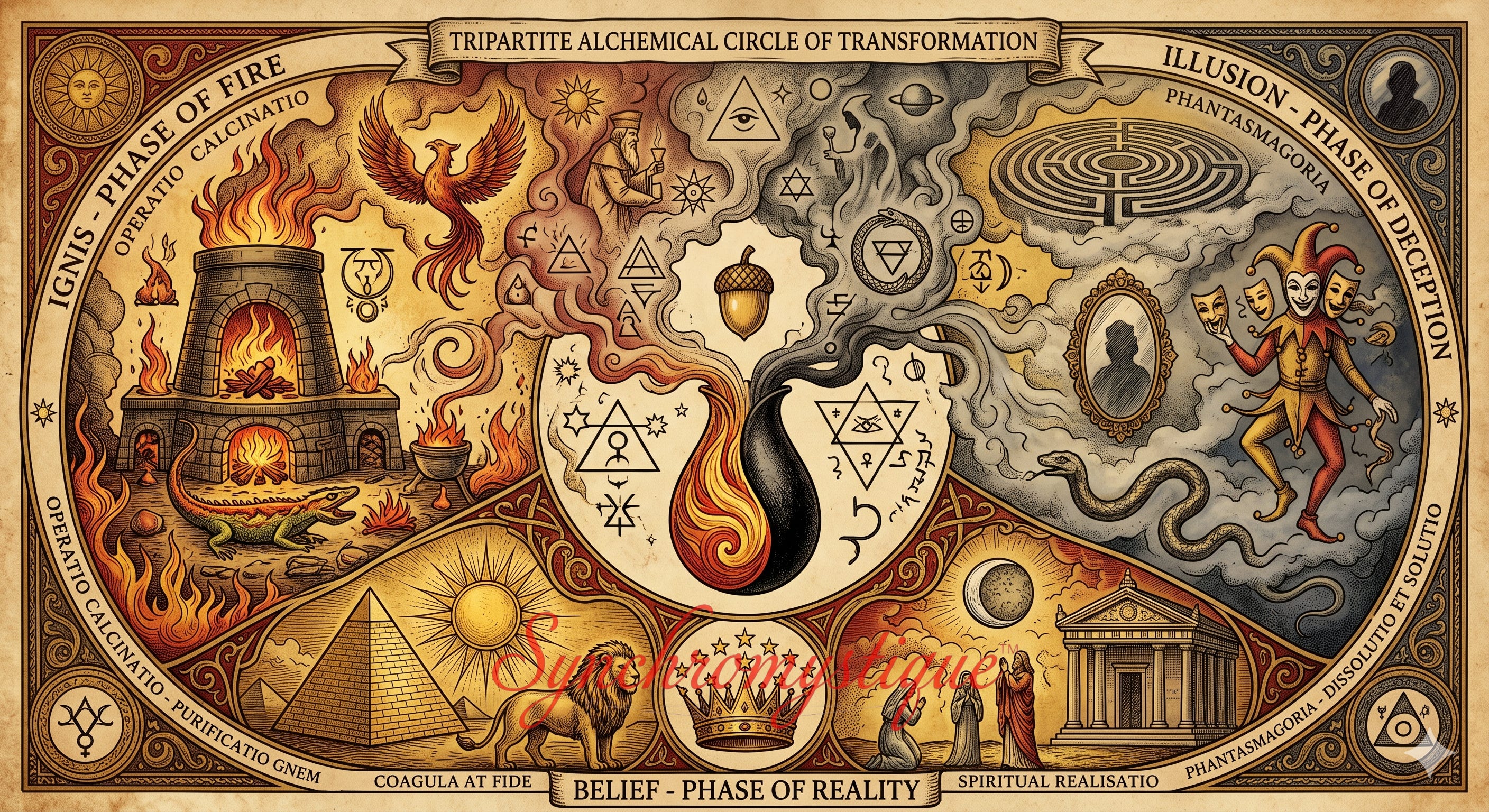
In Colonel Roy Mustang (a character in the Japanese “Manga” comic Fullmetal Alchemist, from the 2000s), the archetype becomes literal alchemy.
Mustang is a fire‑magician within a military hierarchy, a man whose character arc turns on moral awakening, confrontation with the shadow, and calculation of power’s costs. He is the Colonel as alchemist proper, commanding elemental forces with both precision and ethical consequence.
A more satirical — but no less revealing — instance of the Colonel as Alchemist appears in the quirky 2009 Hollywood film The Men Who Stare at Goats, in the figure of Colonel Bill Django.
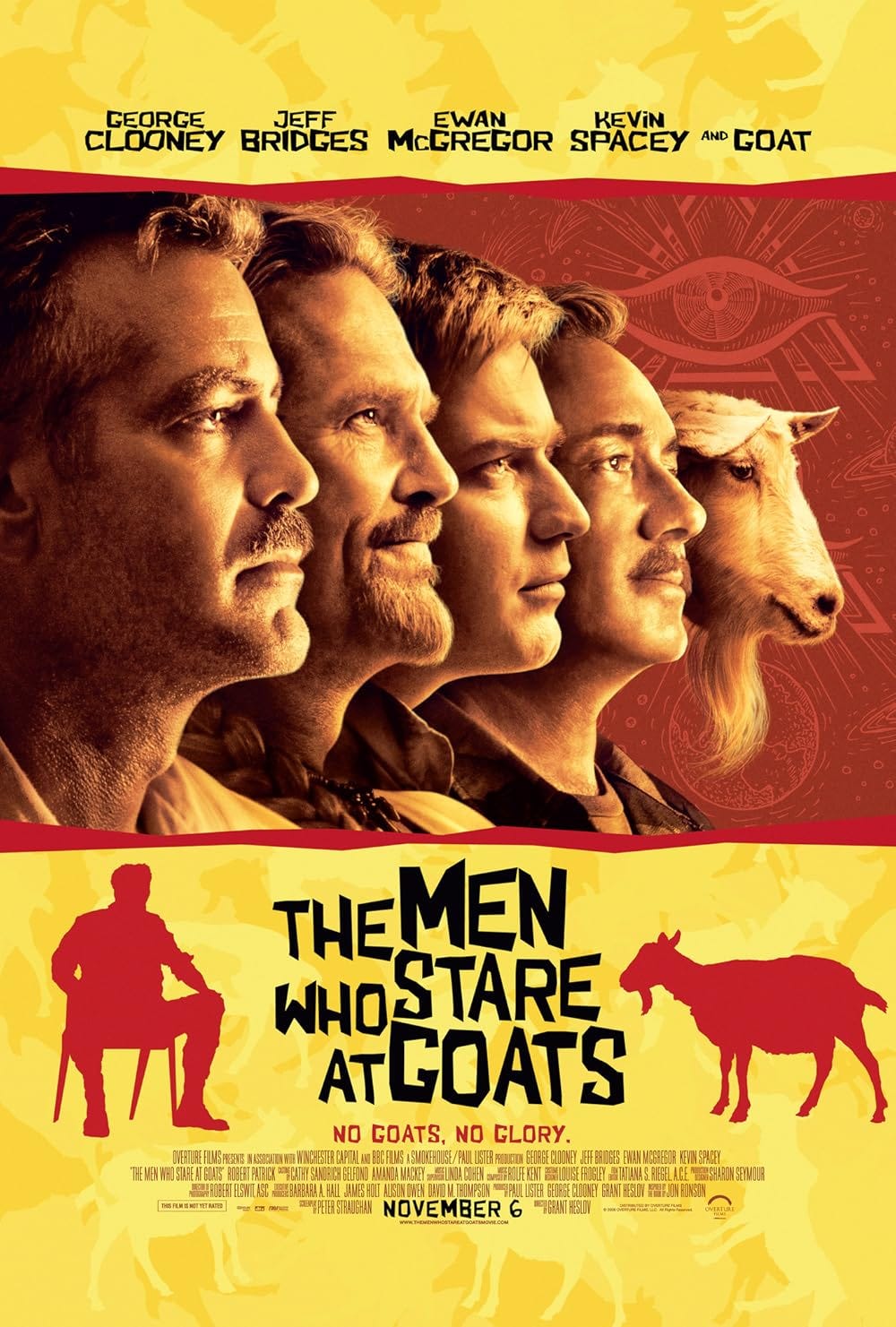
In The Men Who Star at Goats, the military-alchemist reëmerges as a magician‑charlatan hybrid, presiding over a parody of esoteric warfare in which psychic experimentation, ritualized belief, and bureaucratic theater blur into one another. Django is often read by critics as a New‑Age trickster; the film presents him, however, as a well‑meaning but bumbling hippie, with the now‑ostracized actor Kevin Spacey embodying the darker underside of Django’s idealistic “New Earth Army.”
A further, more oblique variation appears in The Colonel Bird, by Bulgarian playwright Hristo Boytchev. Set in a psychiatric ward, and through accidents of history, the patients come to believe that they are real soldiers awaiting orders.
Here, the Colonel exists only as a collective hallucination — not as a bona-fide commander, a shared delusion around which identity, hierarchy, and purpose temporarily organize themselves. In the play, rank is reduced to pure belief. On this wavelength, it’s worth registering the point explicitly that Trump often functions as a living generator of Twilight Language, as opposed to a mere empirical political actor. As synchronicity would have it, Trump’s reference (previously noted) to the unnamed “full-bird colonel” gives relevance to this seemingly marginal foreign production.
There’s also Colonel William N. Selig, the vaudeville-magician-turned-film-pioneer, who styled himself “Colonel” as part of his showman persona.
Selig built the first permanent film studio in Los Angeles, California, …
…produced the first Wizard of Oz adaptation, …

…and maintained a private zoo for his jungle pictures.
He is the Colonel as cinematic alchemist, transmuting illusion into profit. Of course, “Oz” itself is a potent — and perennial — Twilight-Language word.
VII. The Colonel as Political Operator
Edward Mandell House
Like Kentucky Fried Chicken’s “Colonel” Sanders, Colonel Edward Mandell House was given an honorary colonelcy, without military service.
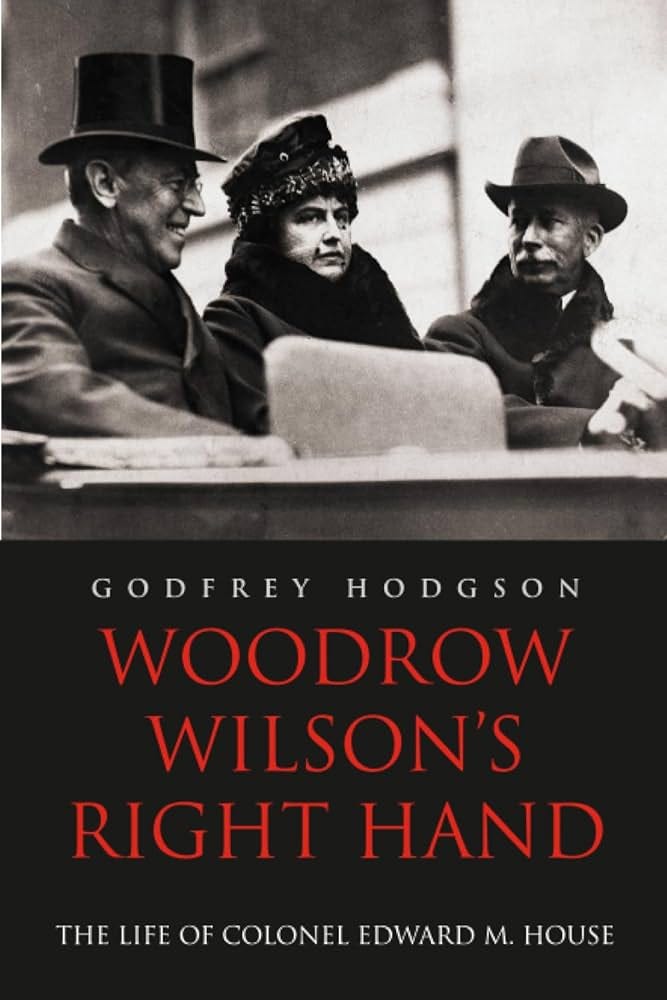
Colonel House was Woodrow Wilson’s closest adviser, back‑channel diplomat, and architect of the League of Nations.

His 1912 novel, Philip Dru: Administrator, imagines a benevolent dictator who seizes control of the United States to impose sweeping reforms.
Historically, many of the reforms imagined in House’s book closely resembled the 1912 platform of Theodore Roosevelt’s Progressive “Bull Moose” Party, a reminder that “progressivism” at the time was not chiefly associated with Democrats or social issues, and that Roosevelt—president from 1901 to 1909—was one of several prominent Progressive Republicans, …
…alongside figures such as William Howard Taft and Herbert Hoover, to varying degrees.
House is the Colonel as political sorcerer, the hidden hand behind the throne.
Incidentally, there have been many successors — or would-be successors — to Colonel House in this regard. We have a list to publish shortly. Ultimately — under both of the non-consecutive terms of Donald John Trump — this lineage gave us the likes of Stephen Miller (an adviser who consolidated his agenda‑setting authority across U.S. domestic and security policy).
It is commonly claimed that Colonel House’s influence collapsed after Wilson supposedly felt betrayed by him during the Paris Peace Conference of 1919. But that account is questionable given that Wilson suffered a debilitating stroke later that year — before the conference had concluded.
As we have noted elsewhere, including in our Substack article “Psyocracy” …
…and in the YouTube video “Haunted Washington, D.C.” …
…both the stroke itself and the extent of Wilson’s incapacity were jointly concealed by Navy physician Cary (Travers) Grayson and Wilson’s second wife, Edith, who thereafter controlled access to the president.
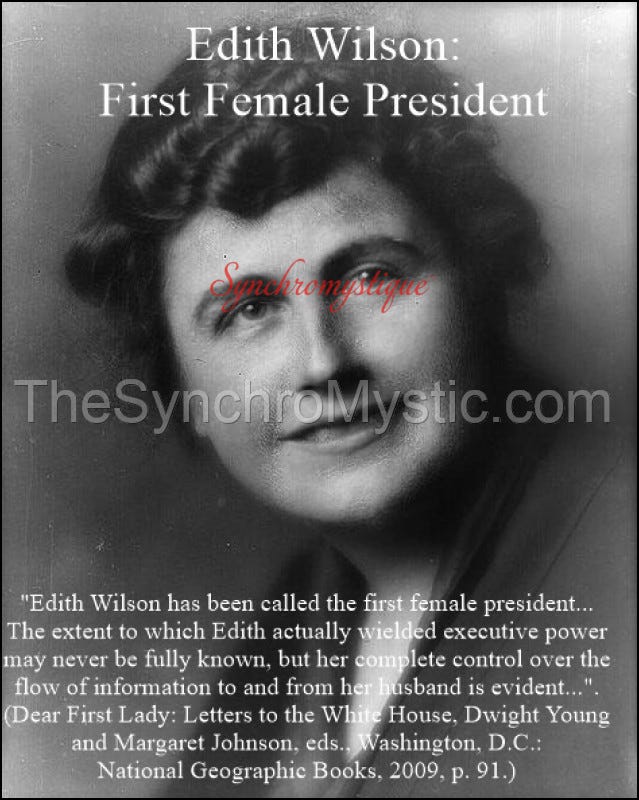
Some historians have even dubbed Edith the “first female U.S. president,” on the grounds that she effectively mediated, and perhaps exercised, executive decisionmaking for the remainder of Wilson’s term, though the full scope of her authority remains unclear.
Against this backdrop, House’s functional “Administrator” — who seizes extraconstitutional control of the United States — takes on renewed significance, its vision of a charismatic ruler centralizing power resonating with contemporary debates over executive authority, the administrative state, and the public’s alleged appetite for strongman leadership.
VIII. The Colonel as Spiritual Administrator

Henry Steel Olcott
Colonel Henry Steel Olcott, co-founder — with Madam Helena Petrovna “H. P.” Blavatsky — of the Theosophical Society and reviver of Buddhism in Ceylon (later Sri Lanka), …
…is the Colonel as spiritual administrator.
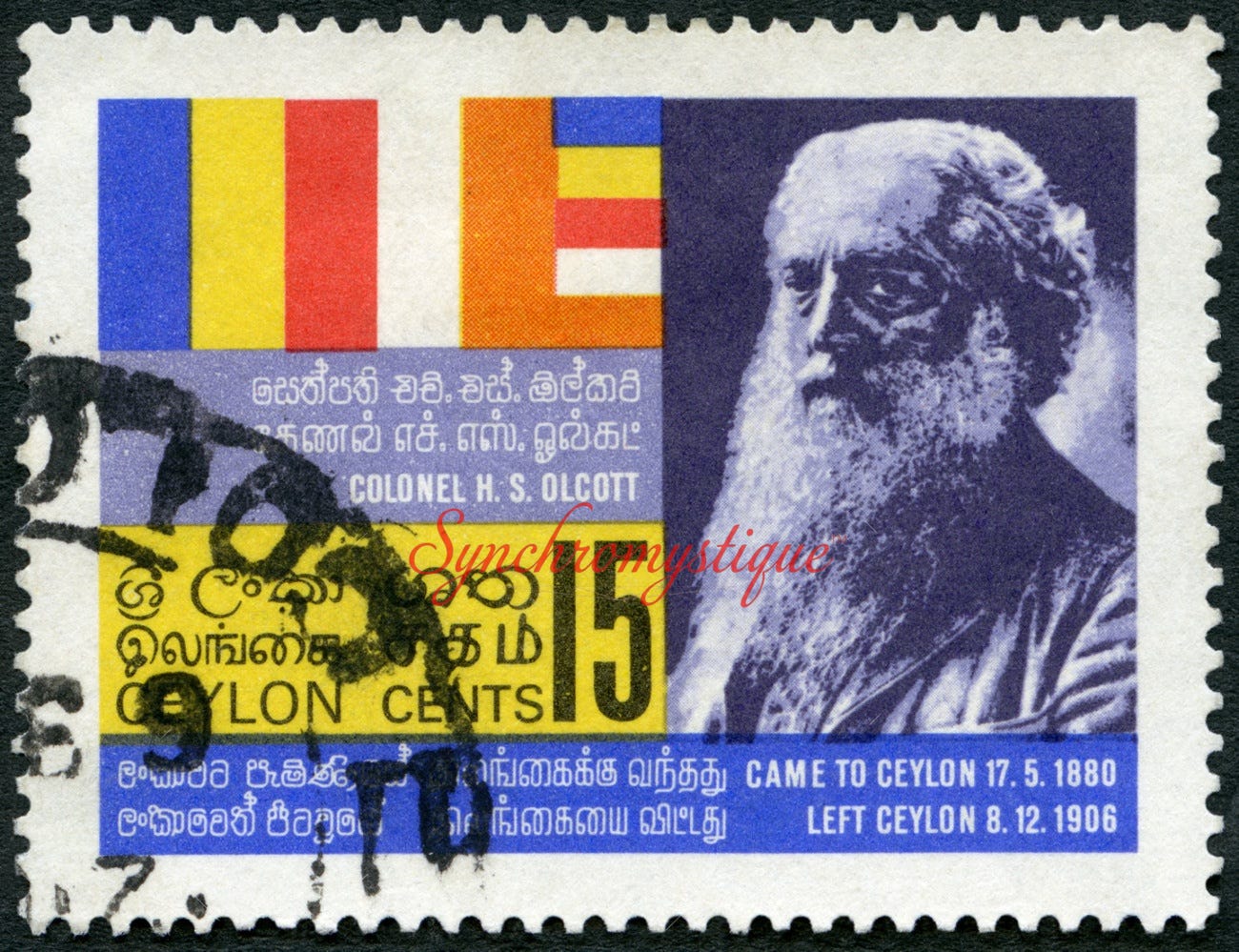
…Like Colonel Ingersoll, a real Civil War officer, Olcott’s pro-Buddhist legacy outshines even his Theosophical work and is still commemorated in Sri Lanka.
We presented a thumbnail sketch of Theosophy in our video “10 Arcane Words.”
We profiled H. P. Blavatsky in “Top 10 Occultists of All Time.”
We mentioned her — in passing — in our “10 Occultist Spies” …
…and “Four Corners” videos …
…(or, at least, in the footnotes of the longer written versions).
And we briefly discussed her “Root Race Theory” in “10 ‘Nazi’ Occultists, Part 1.”
As for Ceylon, well… stay tuned!
IX. The Colonel as Character‑Forge
Defoe’s Colonel Jack
Finally, a literary work of note is Daniel Defoe’s 1722 novel Colonel Jack.[10]
The titular reference begins as a childhood nickname and becomes a self‑fashioned identity. Jack rises from street crime to soldiering to wealth, falling and rising again in cycles of moral collapse and renewal.
The Colonel here is an aspirational mask, the persona one forges and grows into — or fails to.
As a Lexi-Link, actor Willem Dafoe has supposedly been cast as Colonel John Hunt in the upcoming movie Tenzing, about a mountaineering expedition on Everest.
Interlude: Cereal-Serial
Michael Hoffman has noted that the word pair “serial” and “cereal” collapse into one another psycho-phonetically or synchronistically.
And Hoffman has gone so far as to suggest that “serial killers” (s-e-r-i-a-l) in the contemporary vernacular are merely rewarmed versions of human sacrifices (such as those that might have guaranteed the success of various grain crops — or cereal, C-E-R-E-A-L), as in this artwork depicting an Aztec blood ritual during Late-Postclassic Mesoamerican history...
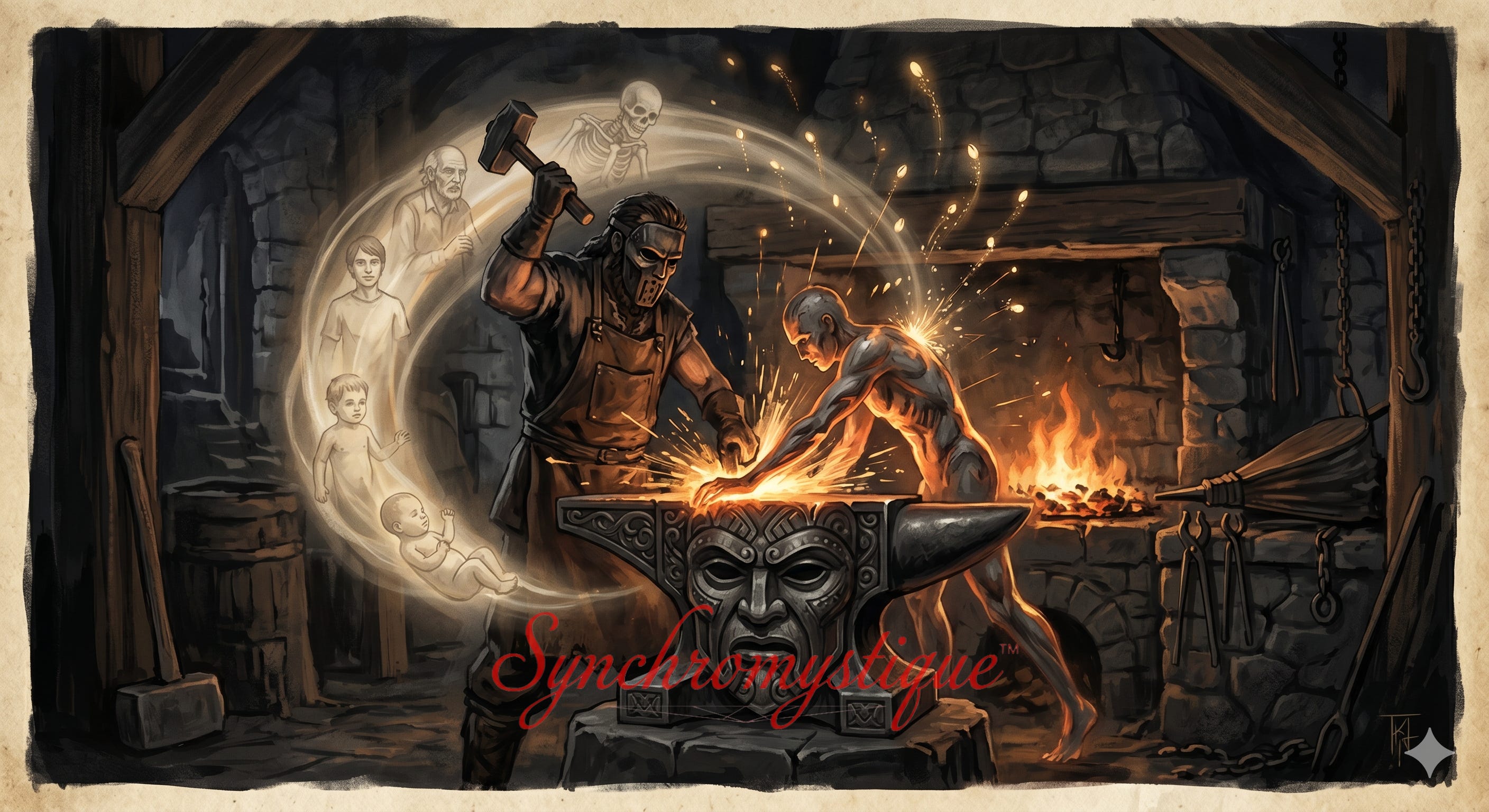
Similarly, or so it seems to us, the word “colonel” never quite holds its shape. Spoken aloud (at least, pronounced in the conventional way), “colonel” collapses into its homophone, kernel.
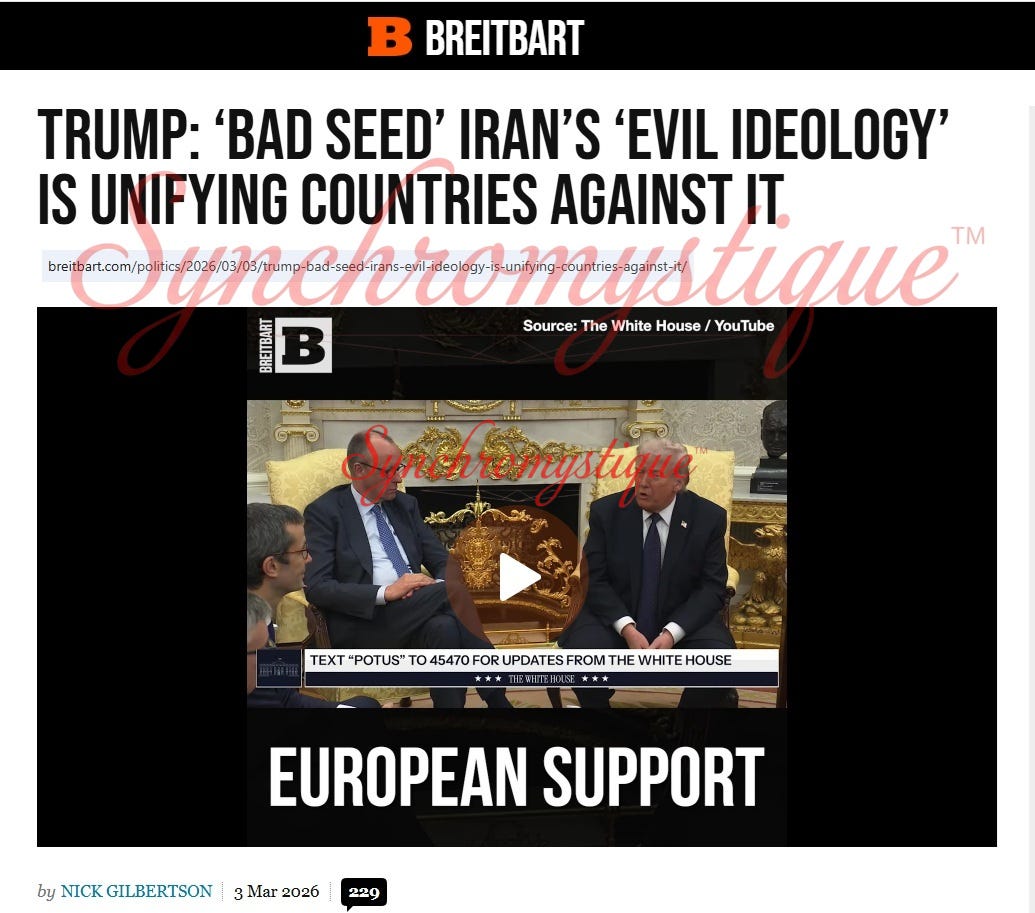
And, with that shift, a register of command quietly transmutates into a vocabulary of essence: the U.S. striking at the heart of Iran; Trump threatening its return to a stone age; the administration’s overconfident and Orwellian declaration of the completion of its core objectives; and its further identification of the hostile Shia regime as a malignant seed.
What appears at first as scattershot metaphor coalesces into a consistent alchemical grammar. This is both the baffling aspect — and the utility — of studying Twilight Language.
In this case, the colonel-kernel pair seems to give us a metaphor for power. Beyond the externals and window-dressing — which are encoded in the exoteric word “colonel,” there’s a deeper, internal center or core, also called the seed — or the esoteric stone.
For more on the latter lore — specifically, the so-called “stone of destiny” — see our video on the coronation of Britain’s King Charles III.
But… With this much as a prelude for a closer examination of the kernel, let’s now survey that homophone.
X. Kernel (Operating System)

The Technical Core
Given the rise of the Technocracy, one place to begin would be to note that a computer’s kernel is the core of its operating system.
It’s the master coordinator that mediates between software and hardware. The kernel allocates memory, schedules processes, and acts as a secure gatekeeper.
In quantum computing, a classical runtime is said to play a similar role.
In AI, too, “kernels” appear — …
…this time, as optimized GPU routines and, more conceptually, as the idea of an “AI kernel” orchestrating tools, memory, and tasks.
By the way, once upon a time “GPU” stood for Graphics Processing Unit — hardware originally designed exclusively for rendering images. But, these days, GPUs are the workhorses of AI computation due to their ability to perform massive parallel calculations.
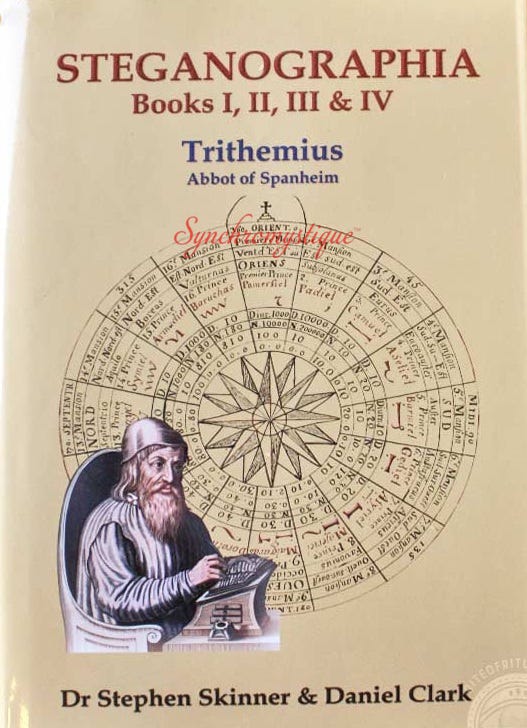
Just as the 15th-16th-century German Benedictine abbot and esoteric Johannes Trithemius, encoding secret messages within the innocent surface of a text, could scarcely have imagined that his art (steganography) would one day be extended to hiding data within digital audio files, network packets, and AI-generated content; so, too, the GPU’s designers little dreamed that their dedicated graphics chip would become an engine of artificial intelligence.
But… our lexical bottom line is this: The kernel stands for an organizing principle; it’s the unseen center that makes its system functionally coherent. However… The word kernel is also symbolically pregnant when we consider that it has to do with seeds.
XI. Kernel (Alchemy, Myth, and the Maze)
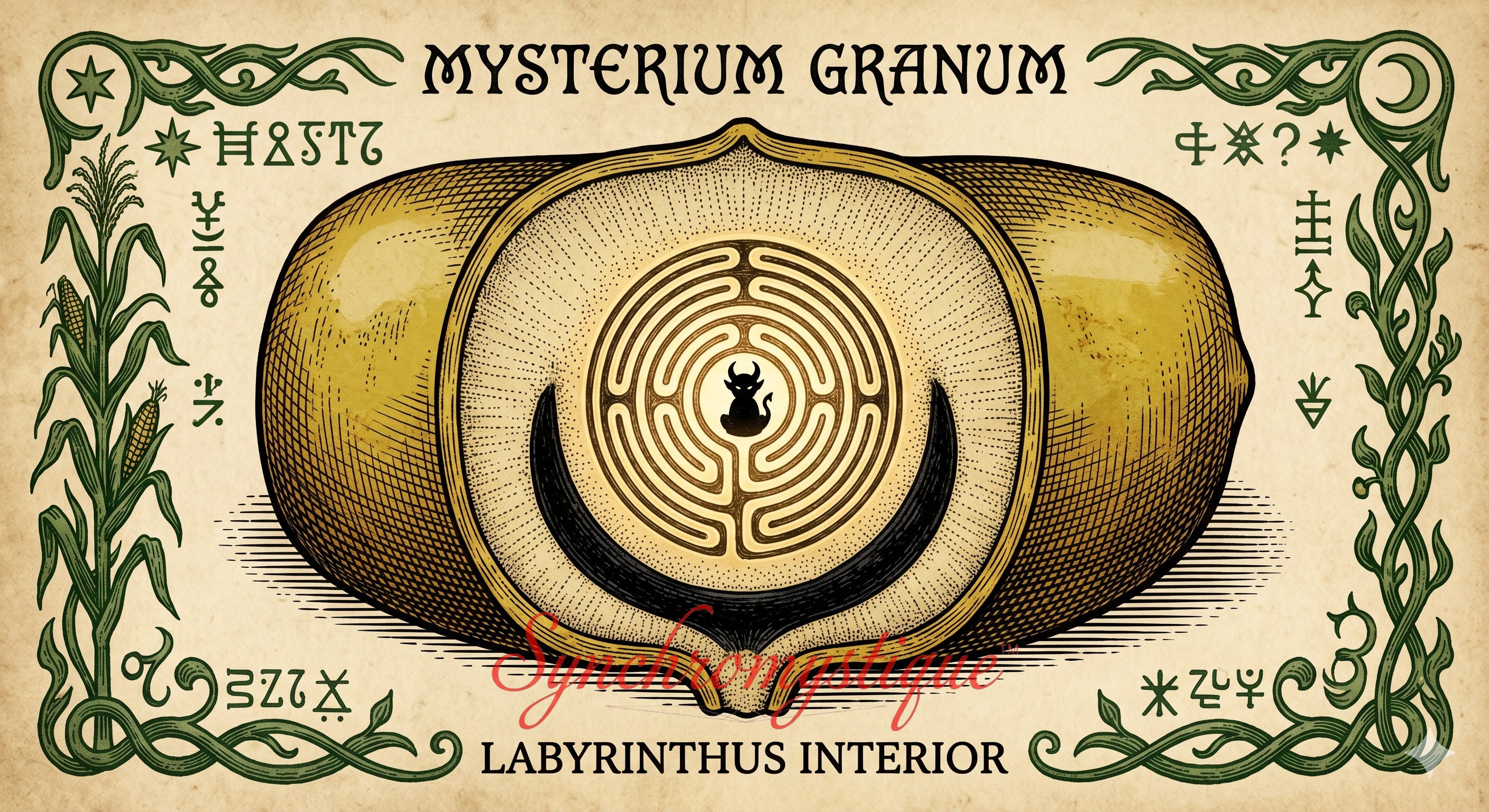
‘Maze’ (BellCurve, 2012)[11]
In an article titled “Maze,” and posted to my old BellCurve weblog in 2012, we treated the maize (or corn) kernel as a microcosmic mystery‑center — …
…a seed containing the entire cycle of death and rebirth.
Its “black layer” — where the kernel attaches to the cob — is an emblem of nigredo, the alchemical “blackening” phase. From there, we developed a chain of speculative associations: including ones with Saturnian import.
— Saturn, after all, prominent in a publicized six-planet alignment timed (coincidentally or not) with Operation Epic Fury.
In this framework, the kernel becomes:
● a labyrinth in miniature
● a womb or chamber of transformation
● a Persephone‑seed, descending into darkness
● a hermetic vessel, in which matter must putrefy before renewal
In this reading, the kernel is the center of the maze, where lies the Minotaur — the hidden point where dissolution becomes germination: Blackening becomes greening.
XII. Colonel vs. Kernel

Mask and Seed
Across these diverse figures, we suggest the following pattern tendencies.
● Colonel represents the exoteric mask, persona, the outer projection of authority.
● Kernel is the esoteric seed, the inner essence, or the hidden center.
Or, if you like, the Colonel is the outward face — sometimes heroic, sometimes monstrous, sometimes absurd; while the kernel is the inward truth — the germ of transformation, the point of origin.
The two words are homonyms by accident, but archetypes by synchronicity.
One is the dress or uniform. The other is the core.
And some of the most noteworthy incarnations of this archetype — Kurtz, House, Olcott, Fawcett, Mustang, Selig — are those in whom the mask and the seed blur, and where the persona becomes a delivery mechanism or seed for something deeper and stranger and even more essential (that is, of or having to do with essence).
The airman-rescue narrative offers a final emblem: the Colonel as kernel in extremis —
…buried, concealed, reduced to signal and symbol alone. The rank has utterly collapsed.
What matters, in that crevice, is not command authority, but only individual survival; (is this a portent of the American future? Holed up in heatless, powerless houses, without electricity, hoping to scrounge enough food to live another day?) …
In this final chapter, there’s no visibility, merely timing; no mask at all — only a core.
XIII. Closing Cadence
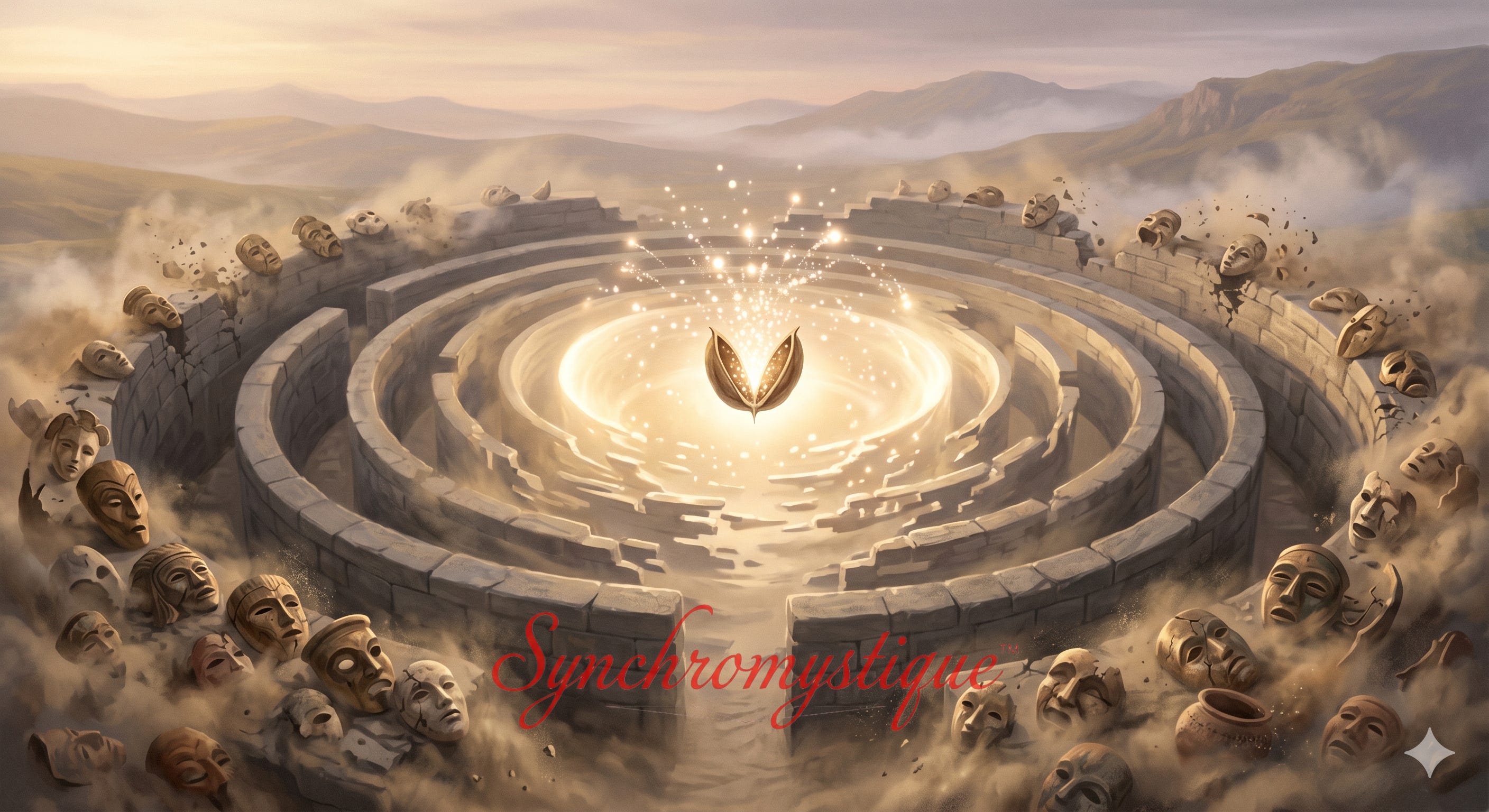
Follow the Colonels to the kernel — the place where falsities fall away.
Split the kernel and reveal the maze.
Follow the maze to the minotaur at the center — and meet the Shadow.
Or, to be less poetical: We might suppose that the Colonel symbolizes the mask. The kernel can only sprout when the mask cracks.
That is (an instance of) the Revelation of the Method.
[1] When Zal’s wife Rudabeh faces a life‑threatening childbirth, he burns the feather, and the Simurgh descends to instruct the heroes in how to save both mother and child, effectively becoming a guardian spirit of wisdom, healing, and right destiny.
[2] Other reports say “48 hours.” Both arugula (“rocket”) and cannabis may germinate within that window.
[3] Francis Bacon’s was of course connected to such entertainments. He was closely tied to Gray’s Inn — one of the important, lawyerly, “Inns‑of‑Court.” A masque held for royal wedding festivities (and dated 1613) was explicitly dedicated to him, crediting his rôle in its organization and presentation.
[4] Steven Nelson, “Trump tells The Post he’s preparing military if Iran fails to comply in talks: ‘We’re loading up the ships’,” CNN, Apr. 10, 2026, <https://nypost.com/2026/04/10/us-news/trump-tells-the-post-hes-preparing-military-if-iran-fails-to-comply-in-talks-were-loading-up-the-ships/>.
[5] Tom Nichols, The Atlantic, Mar. 20, 2026, <https://www.theatlantic.com/ideas/2026/03/trump-iran-war/686470/>.
[6] See, e.g., Richard Sale’s article “Analysis: Hamas History Tied to Israel,” UPI, Jun. 18, 2002, <https://www.upi.com/Business_News/Security-Industry/2002/06/18/Analysis-Hamas-history-tied-to-Israel/UPI-82721024445587/>.
[7] For other criticisms in the vicinity, see: “‘The Biggest Trick’ – General Brik Disputes Netanyahu’s Stance on Philadelphi Route,” Palestine Chronicle, Sept. 7, 2024, <https://www.palestinechronicle.com/the-biggest-trick-general-brik-disputes-netanyahus-stance-on-philadelphi-route/> and Yitzhak Brick, “‘Entering Gaza could lead to a global war’ A special interview with General (res.) Yitzhak Brick two weeks after the 7th of October,” interview, Israel Center for Grand Strategy, Oct. 10, 2023, <https://icgs.org.il/en/videos/itzhak-brik-interview/>.
[8] Robert B. Stinnett, Day of Deceit: the truth about FDR and Pearl Harbor, New York: Free Press, 2000.
[9] David Ray Griffin, The New Pearl Harbor: Disturbing Questions About the Bush Administration and 9/11, Northampton, Mass.: Olive Branch Press, 2004.
[10] The History and Remarkable Life of the truly Honourable Col. Jacque, commonly call’d Col. Jack.
[11] “Maze,” Bell Curve, Oct. 5, 2012, <https://curveofbell.blogspot.com/2012/10/maze.html>.